Leveling the Ditches

Photo credit:  Thomas_H_foto

I’ve spent alot of the last 20 years going to therapy. I’ve had a couple of good therapists during that time who have really done some hard work with me and have made all the difference in helping to guide me in becoming who I am today. I’ve tried to be very careful not to put them on pedestals in my mind, but I am grateful for the time and patience and consistency that they have offered me as I healed wounds, began to learn that I have way more self agency than I ever thought, and started to imagine that it might actually be possible for me to become the kind of person I want to be.

One of these therapists really hardly talked at all during our sessions. I drove an hour to her home office every Wednesday for six months when I desperately needed help in moving out of ambivalence to determine if I was going to ask my then-husband for a divorce or suck up my misery and resign to staying in a bad situation for the long haul. I knew I wanted out, but I was desperately afraid. Each week I would walk in and greet her standard poodle Izzy, and then sit on her couch, while she sat patiently in her chair waiting for me to start talking. She never pushed me, never cajoled me into telling her what was on my mind. Instead, she just calmly and empathetically listened while I talked myself into being brave and the readiness to take the big leap off the proverbial cliff that had been calling my name for over ten years. That six months of non-judgmental listening was one of the best gifts I’ve ever received. She could have told me from the start what I should do. She could have offered me all kinds of therapeutic techniques to employ in the situation. But somehow she knew that what I needed most was someone who would just sit, and listen, and hold space for me to cry, and rage, and process all of my feelings and fear out loud. Then one day, after that six months, I woke up and knew exactly what I needed to do, and I did it. I took a running leap and launched off the biggest, scariest cliff of my life, knowing that I would be OK.

I can’t stop thinking about Mary Oliver’s poem, The Journey, as I write this, especially the last part of the poem. That therapist allowed me the time and space to really start hearing MY voice amidst all the voices around me, real and hypothetical, with their endless commentary and judgment about my life.

…and there was a new voice
which you slowly
recognized as your own,
that kept you company
as you strode deeper and deeper
into the world,
determined to do
the only thing you could do—
determined to save
the only life you could save.

The other really impactful therapist in my life…she’s done alot of listening, but she has pushed me so hard over the last five years. I can’t fake it with her, can’t wiggle out of reach of her concentrated stares that forewarn me she’s about to confront me on some lie I’ve been telling myself. She’s the kind of therapist that is immensely kind and empathetic, but she also knows when to tell me to cut the crap and stop faffing around. When I slander myself or make some self-deprecating statement, she forces me to rephrase what I intended to say before she will allow the conversation to move forward. She is also so matter of fact, and has mostly never gotten perturbed by whatever I’ve thrown at her. ‘You’re really angry now, Julie,” she’d say. “But at some point you’re not going to be angry anymore.” Or, “Fuck may be your favorite word to describe everything right now, Julie, but at some point you won’t need it anymore.” This particular therapist refuses to let me cop out and defer to others for direction on how my life should go. She has always been insistent that my intuition is spot on and that I don’t need anyone, and certainly not a man or a relationship, to save me, and that everything I will ever need is right inside of me. It took me a couple of years, but I finally started to believe it.

One huge lesson that I’ve been learning, especially over the last five years, is that we all have traumas of varying degrees, and we are all wounded…and while we can’t change the things that happened to us and made us afraid, or feel broken, or ashamed…it is our responsibility to determine how we will respond and heal from those things. Admittedly, this can be a hard realization to swallow. It is easier, especially early on, to want to point back to our deep hurts and the people that hurt us, and cast the blame onto them. And often, we want them to have to pay the price for what they did to us, or to come to us and apologize….or at least give us explanations for why they did what they did. Or, sometimes, we just take on the guilt and blame of all of our traumas, and cling, even unconsciously, to the belief that we deserved what was done to us because we are inherently unworthy or unlovable or “messed up”.

It is much easier for us to remain victims regarding our traumas and shame. I mean, if we’re honest about it, there are some real payoffs to allowing ourselves to remain in that state. If we work it right, it can grant us alot of attention from other people, it allows us to control others’ actions around us so they don’t make us uncomfortable or “trigger” us, it allows us to not have to take responsibility for our lives and choices, and it enables us to maintain the status quo, shifting blame to others for us not creating the lives that we want.

What I just said above can come across really harsh, I know it. I used to get so irritated when I would hear things like this.

“So, we’re just letting people who hurt us off the hook? Why do I have to be responsible for fixing things that others broke in me? Why are you putting the burden on me…don’t you know what they did to me?” This is where pain and suffering need to be differentiated. When “those” people hurt us, they caused us pain. For sure. It was real, and terrible, and unjustified, and we didn’t deserve it. But when we carry what happened to us in the past into our present, WE are perpetuating that pain as unnecessary suffering. As harsh and unfair as it sounds and feels, we are causing our own continued suffering when we remain identified with the past.

Even while I’m writing this I’m bristling up a bit. It still bothers me a little, even though I’ve become pretty convinced it is true. But I do know this: I am no longer OK with events that happened decades ago, or people that are long dead, or even hurtful people that are in the periphery of my life, to control my happiness, my sense of self worth, or have any ultimate say in my journey to becoming the person I’m aiming to be. It’s a matter of anger and pain transformation. We have to look deeply at the pain that we experienced, and deeply feel the sadness and grief and anger, and allow these energies to be transformed within us so that they no longer perpetuate suffering, but rather, motivate us to action that is directed in our favor and towards our own personal good.

This is a hard one, for sure. Most of us, I think, are hurt the worst in our childhoods. Those wounds, whether intended by others or completely accidental, can help shape our personalities, influence whether we learn to fight, flee, freeze, or fawn, and can paralyze our ability to trust ourselves and believe that we have voices that deserve to be heard. Conversely, those wounds can cause us to lash out at others, or condescend, or learn to blatantly disregard the rights of others as we strive to gain some sense of security in our lives.

There are a billion videos and books out these days on narcissists, mother wounds, father wounds, etc. I mostly think this is a good thing: the presence of these kinds of materials shows that we as a society are becoming more aware of how we are shaped in our childhood by various people and circumstances, and how the patterns of codependency and toxic relationships can pull us in and play out. True, some of these topics have become trendy and overused, and NOT EVERYONE is a narcissist. To riff off something similar that a friend of mine once said, I know’s there’s not a narcissist behind every rock, but I’d like to be able recognize when a real narcissist is behind the rock in front of me.

I think it’s really good that it is no longer so taboo or uncomfortable for people to talk about going to therapy, and that it is more openly encouraged these days. That we are allowed to look back on our lives and name the things and people that hurt us, acknowledging that many of those events were not OK. Even more so, I’m very glad that we are speaking the message more and more openly that we are not required to do life or stay in relationship with people that have hurt or continue to hurt us. It is OK to divorce family members, or to even set up very firm, clear boundaries for interactions. It is OK to have varying levels of intimacy with different people in your life; it doesn’t make you dishonest if you aren’t as transparent with one person as you are another. I’m so grateful for all the great books on boundaries that have been published over the last couple of decades, especially for those of us who grew up suffering, without any sense of space, personal or otherwise, that we could say belonged solely to us.

At the same time, I have heard alot of people gripe about how we need to stop blaming our parents for everything. “That’s just the way it was in the 80s.” Or, “My parents whipped my ass and I turned out just fine.” (I internally take issue with this statement every time I hear someone say it.). Or, “These younger generations are just lazy, don’t appreciate the value of hard work, are too soft, (insert a billion similar phrases here).” Most of the time these statements annoy me, and I want to slip them my therapist’s number and tell them it might help to talk to someone. But I also recognize that at a certain level, they are right. Not about this generation being lazy or that we all deserved a good spanking. At some point in each of our journeys, we have to let go of the blame game and stop linking all of our pain and our hurts to “that person” or “that one event”. Endless blaming and shifting of responsibility to others is never going to get us to where we want to go, long term. Early on, when we start down our paths to healing, it is good and necessary to recognize who and what hurt us and stop making excuses for them. Alot of those things absolutely need to be called out. But then, as we start to grow and expand and begin to take our rightful places in this world, the blame game has to stop or we’ll remain stuck – Stuck at a life level I think may actually be worse than the place we started from.

A medical intuitive and spiritual teacher that I really like, Caroline Myss, often tells a story about how at some point, it is crucial that we let go of the blame game and dis-identify with our trauma. She tells of a Native American ritual that helps people get over their traumas and soul wounds. I can’t remember all the details from her telling of it, but basically the idea is that the community would listen to the telling of one’s trauma three times, but after that, they would turn their back on the remembering and telling of the trauma. Not because they didn’t care about the person or recognize the significance of that deeply painful experience, but because they knew that continually reliving and affirming the existence of the experience did the individual no good. Ultimately, it would keep the person stuck.

We are not meant to stay wounded. We are supposed to move through our tragedies and challenges and to help each other move through the many painful episodes of our lives. By remaining stuck in the power of our wounds, we block our own transformation. We overlook the greater gifts inherent in our wounds – the strength to overcome them and the lessons that we are meant to receive through them. Wounds are the means through which we enter the hearts of other people. They are meant to teach us to become compassionate and wise.

– Caroline Myss

Something that sometimes annoys me is that once you get to a certain point in your healing journey, and try to employ the blame game or verbally recall your traumas out of a conscious or unconscious need for attention or affirmation or whatever…it will fall flat. I’ve noticed that every once in a while, especially when I’m tired or just really needing affection or intimacy from loved ones, instead of just openly asking for what I want or need, I’ll conjure up something that is related to a past trauma of mine, and it involves me somehow recounting that trauma and how much my current feelings or the situation is reminiscent of it. Almost every time I do this, I get an ick feeling mid way through my “trauma telling” that advises me to stop going down that path….to stop talking… that it’s not serving me. Telling me that if I need connection I just need to ask for it. But more often than not, I’ll push through, tell me story, and sure enough, the outcome I was “hoping” for fell flat or I came away feeling manipulative and gross. Not because I was telling a lie or was consciously trying to manipulate someone into giving me what I needed, but because I recognized that I’m past those traumas…they’re old stories that no longer define me, and when I try to re-identify with them, it makes me feel inauthentic and icky. As it should.

At some point, we just need to drop our stories.

I was talking with my therapist the other day about an unexpected existential crisis that arose in me about COVID vaccines and big pharma, of all things. The actual details of why Pfizer and Ventavia were causing me angst really don’t matter, but what came out of this conversation through some verbal processing felt really helpful to me. My therapist and I were honing in on how the belief about the situation was making me feel, and I was able to identify multiple instances from my childhood in which I felt the same way.

As my therapist and I worked through my uncomfortable feelings around my vaccine crisis, and how they were bringing up similar feelings that I’ve felt before, I felt I needed to qualify to her that while I was bringing up a story from the past, I was not trying to throw anyone under the bus. I was not trying to launch into repeated angry tirades about how someone hurt me in the past and made me feel exactly how I felt now. Rather, I just wanted to express that I could perceive my thoughts and feelings traveling down well know roads in my mind. These roads were first laid down by people and hurtful events, but over time, I allowed them to become deep, worn, well traveled grooves that would come to direct so many of my behaviors and responses to different life events.

As I began verbally processing about all of this, my therapist threw in a zinger as she always does. To paraphrase what she said to me: people and events hurt us one time, or in isolated events, but then we perpetuate that hurt long term in ourselves.

Dude, that is a painful thing to think about, to write down. But I think it is also wildly liberating. Because…it implies we are not doomed to live forever in the shadows of what was done to us. We may not have the choice about pain that is caused us, but we have agency over how long we want to suffer from that pain. That feels like gospel good news to me.

The interesting thing about the conversation was that when I think about those childhood events connected to my current feelings, there was no anger present. No blame. No pointing fingers. It was just a noticing that my anxiety and fear of what my crisis might be saying about me was the same anxiety and fear that I had felt multiple times before. The feelings were yucky, but familiar. The thought patterns surrounding them were well tracked in my mind and I knew every bump and curve along their paths. I used to be angry when I made connections between these feelings and old events. I knew exactly which adults in my life had caused those feelings in me when I was a child and exactly how they wronged me. And for a long, long time, I would allow that rage and resentment to rise up in me when I thought about the specific ways they had hurt me. But at some point, with my therapist’s help and alot of internal shadow work, I realized the anger was no longer serving me and it was time to transform it and forgive “those people”. Forgiveness and what I think it means are a whole other conversation, too long for today. But ultimately, I realized I was tiring of carrying around pointless anger that did nothing but keep me stuck and miserable about the apologies I was never going to get. In the meantime, here is another great offering from Caroline Myss, to chew on for a minute:

Ultimately, forgiveness is a battle between the righteousness of your ego and your capacity to transcend whatever situation you’ve experienced that has shattered the following myths that maintain that suffering is deserving of recognition, reward, or righteous vengeance:

  • God is on your side and only your side.
  • Justice should be logical and reasonable and always serve your side of the story.
  • God follows the code of human law – if you do only good things, bad things will never happen to you, and, of course, you never do bad things.
  • You are entitled to have all things work out in your favor.

We learn protective mechanisms and ways of being to survive hard things in childhood. Our ability to creatively defend ourselves in different ways speaks to our resiliency and drive to continue living. Many of these behaviors and responses to traumas and childhood are cemented into our personalities and foundational patterns and ways of being as we grow older. Our beliefs and involuntary reactions form what I like to think of as ruts or ditches in our minds…basically well used cognitive and emotional pathways that are carved into us and serve us, at least for a time, until they don’t. Science tells us that neurons that fire together, wire together. Our brains try to be efficient and from what I’ve read, especially in relation to addiction science, create neural pathways that strengthen the more that neurons in those pathways fire.

Those “ditches” in our minds are really helpful because they help with memory, and habit, and doing similar behaviors without having to relearn them over and over or to require constant thinking about what we’re doing all the time. However, they can become maladaptive, especially when we are adults and are interacting with life using the same thinking and behaviors that we utilized when we were younger. When we are children, the ditches are safe places to hide in, low places that can sometimes shelter us from chaos or mayhem around us. They can protect us from absolutely being broken in spirit by hurtful people or unthinkable events. But when we’re older, the ditches can become deep ravines we repeatedly fall into that hinder our forward progress. They may still be places we can hide in for a time, but they may also keep us hidden from good things that want to come into our lives.

Here’s a quick example of a protective “ditch” from my childhood. When I was young, probably about 9 or 10, I began experiencing really strong “sleep attacks” that seemed to hit me out of nowhere. I wouldn’t automatically fall asleep, but I would suddenly feel exhausted and overwhelmingly sleepy and it would be all I could do to stay awake. Whenever I could, I would succumb gratefully to these attacks, and sleep deeply. I experienced these sleep attacks all the way up into my early 30s. Their presence, in addition to frequent migraines and generally poor sleep at night, drove me to get a sleep study done. Initially I was diagnosed with non-cataplexic narcolepsy, with the diagnosis eventually being changed by a sleep neurologist to “an idiopathic sleep disorder.” Basically, I had an abnormal sleep study and was not getting restorative sleep. This was likely contributing to my sleep attacks during the day, but the cause of my abnormal study was unclear.

Long story short…not long after I had this sleep study done, I really got serious about personal healing and self development. I went through a major faith deconstruction and then gradually started reconstructing it, I stopped believing that I had multiple mental health disorders as numerous healthcare providers had convinced me over the previous decade, I found the therapist who really knew how to listen, and I started questioning my entire belief system about…well…everything. And wouldn’t you know….the constant migraines and sleep attacks just completely went away on their own. As I look back on the sleep attacks, I can now clearly see that they were a defense mechanism for me when I was a child. When I was confronted with emotions or events that were too big and overwhelming for me to handle, my body would put me to sleep. Maybe a little like dissociation. And when I would wake up, I would feel like I could move on from whatever had happened. Once I really started doing the deep introspective shadow work into myself, and started learning how to transform my pain and fears, I no longer needed to be “rescued” by sleep. That ditch was no longer needed, no longer serving me; it was eventually abandoned and filled in as my mind found new, healthier paths for which to navigate life.

At some point, it is time for us to start leveling the ditches. Eventually, we need to start filling them up so they can no longer serve as our familiar, comfortable, “automatic” pathways. It is time to start carving out new neural pathways and thought patterns in our brains and minds that actually serve us now that we are grownups. This isn’t an easy task, and it requires us to take on radical responsibility for ourselves and our lives, but as far as I can tell, it is absolutely worth it.

You know that saying attributed to Paul the Apostle in the New Testament? “When I was a child, I spoke and thought and reasoned as a child. But when I grew up, I put away childish things.” 1 Corinthians 13:11, NLT. When I was younger, I would read this verse and feel like Paul was dissing childhood a bit. But no…he was saying that the way we thought and approached life as a child served us then, but now it’s time to rework all of that and use the reasoning abilities we have as adults to approach the lives we are living now.

I suspect that over time many of these feeling and memory ditches in my mind may become more and more shallow, until eventually, I no longer associate them with “events” or “people”. At least, I hope. They will just be small dips in the road that I encounter every so often, where I recognize a “feeling” that I’ve had before. But instead of falling into a deep ditch where I get stuck in old stories and what people did to me, I can just feel the feeling, let it pass, and keep moving on.

Turns out, I was not ever really upset about Pfizer and Ventavia. Not surprising. It was the “thing behind the thing” that I was upset by. Thoughts about a situation with COVID and vaccines dredged up similar feelings that I knew very well, feelings that were ultimately tied to core wounds and beliefs about myself. As I talked to my therapist about all this, I was able to move through those feelings pretty quickly and gain resolution so much faster than I ever used to be able to. What really excited me about the process, though, and showed me I’m actually making some good progress? I didn’t have to go back and get angry at anyone or anything that helped contribute to my core wounds and fears, and I was able to recognize that I didn’t even have to be angry at Pfizer and Ventavia even though it was news about them that appeared to undo me for a few hours.

All I had to do was sit quietly, talk through my feelings and find their origin, question whether my beliefs about them were true or not, decide that what I was believing about myself in the moment was not true, and then move forward, choosing to believe better about myself. In the matter of the one half hour long chat with my therapist, that particular fear ditch got filled in and leveled out just a little bit more.

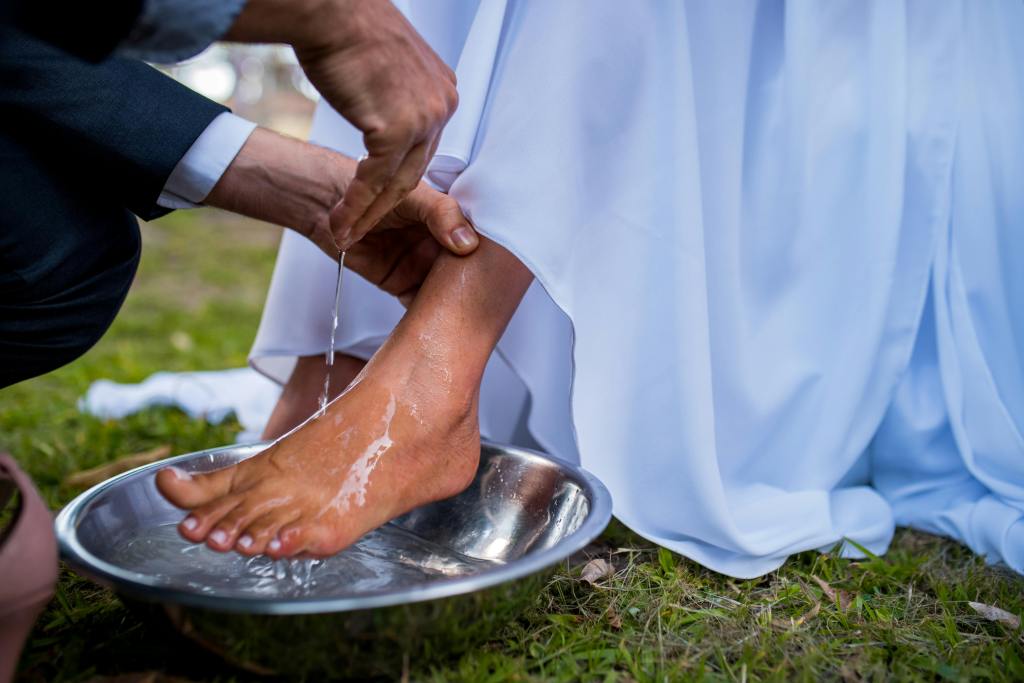
Shame and the Intuitive Art of Footwashing

Photo credit: Photo by EVG Kowalievska

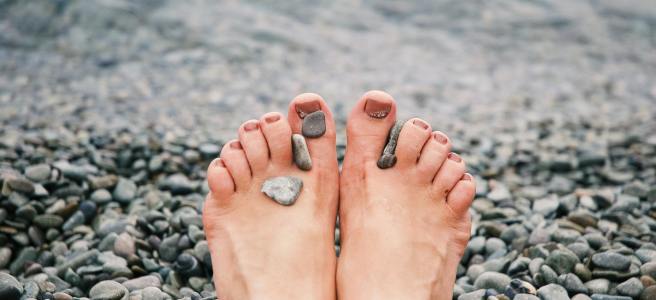
Last weekend I went and got a manicure and pedicure…the deluxe version that takes 2 hours. This has become a regular self care activity for me thanks to a couple of my coworkers who totally got me hooked on it last year. Following the completion of a 50k trail race back in March, my feet were in TERRIBLE shape and missing a couple of toenails. I wasn’t sure there was going to be much coming back from that foot trauma for a while, but as usual, the nail tech at my favorite shop worked his magic and made my feet look good enough again to embrace sandal-wearing and barefoot walking in public this summer.

While I was sitting in the massage chair, being vehemently kneaded in the back and having warm, lavender-scented foot scrub rubbed into my feet and legs, I started thinking about the stories of Jesus and foot washing in the Gospels…you know, as one automatically does when getting a pedicure. In John 13, Jesus wrapped a towel around himself, a sign of meekness and submission that would be totally unexpected from a respected rabbi, much less the Son of Man, and began to wash the feet of his disciples. Simon, the feisty disciple out of Jesus’ 12 followers, initially adamantly refused to allow Jesus to wash his feet. To which Jesus tenderly rebuked him and explained to him that his (Jesus’) message was that we are to serve each other, even in the lowliest of things, like washing the mud and grime and who knows what else from dirty feet. None of us is worthier or more important than anyone else, no matter our privilege or status.

When I was growing up listening to sermons on this story, and then as a Bible major in college, emphasis was placed on the importance of humbling oneself, letting go of ego and sense of status, and being willing to serve the least among us…those in society who may be considered unworthy, or untouchables, or generally “other” and beneath us. This interpretation is certainly a good one, and obvious from reading the gospel text; we all need to learn the lesson that we are interconnected and equally deserving, and it is good for us to learn to set aside our personal preferences and sometimes embrace any “ick” we perceive in various situations so that we can offer love and service to others. But as I was getting my feet tuned up during my pedicure, I flipped the storyline in my head and for the first time viewed foot washing from the perspective of the person having their feet washed. Foot washing, both literally and metaphorically, is a humbling and helpful practice for the washer, especially if they come from a stance of privilege and status and wellbeing. But just as, or maybe even more important, is the ability of the person having their feet washed…to allow it. Which made me think that maybe the whole point of foot washing (or general service and outreach to others, moving beyond this metaphor) is not to just reach out for the feet all those who are brave enough to strut up and stick a foot out… Maybe foot washing is about humbling ourselves to not only serve others, but also to do the harder work of gently and carefully coaxing out the ones who desperately need their feet washed but are too ashamed and afraid to reach for that help.

********************************************************************************************************

Photo credit: Samuel Lima

For a huge chunk of my life, I had major shame issues around my feet. It’s not really relevant to go into details about why, but let’s just say it significantly affected me for a long time. Decades. As an adult, I largely got over the shame issues because they were related to a bunch of other topics I addressed in years of therapy and shadow work. However, about the same time I started getting over those shame issues, I became interested into long distance running. My toes and toenails have never been quite the same since. It took me running several marathon-length distances, especially on trails, to realize how much my feet swell at certain distances, and that my running shoes need to be at least a 1/2 size to a full size larger than the shoe size I typically wear on a daily basis. Even with bigger shoes, long distance trail running, with repeated downhill stretches, cause one’s toes to slam repeatedly into the front of the shoebox. Inevitably, blood blisters develop underneath your toenails and eventually some of those toenails will just give up the ghost and fall off. Big toenails will half break off and then never grow back quite normally; instead, they grow out thicker and with ridges.

This loss of toenails from running used to really bother me; I mean, if you’re wearing sandals during the summer and you’re missing toenails, people might not instinctively ascertain that you’re a runner and you legit earned those toenail losses by pounding mile after mile of pavement and single track. But I’m getting over this, and learning to just suck it up and ask for help in making my feet presentable. I was reluctant to go in to the nail salon the other day because of two of my missing toenails, but I did anyway, and wouldn’t you know…my summer feet were salvaged.

Now, I know that no one reading this really cares about my toenails, their color, or what shape they are in. And that’s really not the point of this post. The overall premise that I want to explore is how shame keeps people from asking for help from the people who can give it to them. And, on the flipside, the foot washers…the people who are capable of offering help….must learn to see the offering of help as an artistic practice that must be guided by empathy and love, intuition, and really good boundaries.

**********************************************************************************************************************

Shame is the greatest cause of debility and loss of a sense of self-agency in life, in my opinion. The worst part about it is that it is often hidden behind masks of the people who carry it. Behaviors that result from shame in one’s life are so frequently misread and misunderstood by others, often leading to the shame-filled person being labeled as angry, or frigid, or snobbish, or aloof, or bitchy, or weak. It’s all the worse when the person driven by shame doesn’t KNOW they are driven by shame. To top it off, we have unspoken rules within cultures that prescribe who is allowed to admit and express that they are filled with shame, and who are told to just suck up their emotions and insecurities and get on with life. Thanks for the good reminder, Brené.

Undealt-with shame can lead to depression and other mental health disorders, anger/rage, and physical un-wellness…both as a result of self neglect and because the body has stored up trauma and unprocessed emotions for so long that it is forced to eventually express itself in the form of illness or the general manifestation of negative external events. Think The Body Keeps The Score and When The Body Says No. Even with my short time working in healthcare as a nurse and now nurse practitioner, the link between childhood trauma, complex PTSD, and the presence of autoimmune disease is so strikingly clear and obvious to me on a daily basis. But even more than autoimmune process triggering by environmental and interpersonal influences from one’s past and current circumstances, I see people who are struggling with poor health (emotional, spiritual, and physical) because they didn’t know that help was available, didn’t know what questions to ask get the help they needed, or they felt so unworthy and ashamed to ask for help, that their health issues piled up over time, eventually resulting in major un-wellness and disease in their bodies.

************************************************************************************************************************

Photo credit: Antoni Shkraba Studio:

************************************************************************************************************************

The first time I saw a truly diseased foot was when I was a brand new nurse working on an ortho/trauma unit. I was in my late 30s by then, but really had little idea at the time how devastating diabetes could be to people’s extremities, especially their feet and toes. One of my patients on that unit, in my first few months of nursing, had a foot with completely necrotic toes. They were black and leathery and I remember being horrified when I was told that the physician caring for the patient expected the toes to “auto-amputate”…basically fall off on their own. In the meantime, I was to apply betadine to the toes on a daily basis to help prevent infection…my own literal task of foot washing, if you will. I had that patient for several days and prayed each day that his toes would not “auto-amputate” during my shift. I also recall wondering how and why a person could let their feet get to that terrible of shape before seeking help.

Since those first few months as a nurse, I’ve seen a ton of foot and lower extremity disease. Now, working in Infectious Disease as a nurse practitioner, I see patients with foot infections everyday, mostly resulting from uncontrolled diabetes or poor vascular flow to their lower extremities. I recall one patient who initially came to the hospital with cardiac concerns; but due to an odd smell coming from the patient, the attending physician pulled off the patient’s socks to discover a foot that was over half necrotic….tar black in color….that ultimately required a below the knee amputation. The situation was really sad, because if healthcare providers had been aware of the problem and able to intervene much sooner, the patient probably could have had at least some blood flow restored to the foot and avoided such a significant amputation.

So many people intersect with the healthcare system far too late to prevent or reverse many of their health problems. And while the reasons for this are usually complicated and numerous, I have seen countless situations where intense shame and embarrassment and a lack of self agency prevented people from reaching out for help until they were desperate and had no other choice.

************************************************************************************************************************

So how exactly is the act of metaphorical foot washing, or serving others who are shame-filled and desperately in need of help, an art?

I think the primary answer is that humans cannot be approached through a reductionistic, mechanistic model and be expected to achieve sustainable wellness.. Based on what I can tell and have experienced in my life, humans are complex, nuanced, layered beings who are not just a bunch of parts and systems that function together, although unfortunately, much of Western medicine approaches the subject this way. Pardon my woefully lacking knowledge of quantum physics, but I like to think of humans in terms of quantum entanglement…both in how all of the aspects of their bodies work together as well as how humans interact with each other in relationship. Simply put, quantum entanglement is the idea that particles become interconnected, such that the state of one particle affects the state of another, regardless of the distance between them. This concept has been extrapolated by some scientists and spiritual seekers, including well thought of theoretical physicists, as applying to things like intuition, the collective unconscious, empathy, synchronicities, and the possibility that we are all part of a larger, more organized, whole. I’m currently reading Wholeness and the Implicate Order by the late physicist David Bohm, and having my mind blown.

Formulas don’t apply to human healing…physically or emotionally. Now, for sure, at some level, there are general principles of medical therapy that tend to produce similar results. We have evidence of this through well designed and executed scientific studies and research. As for psychological and spiritual healing, we have general archetypal patterns we can reference, as well as various therapy modalities that we can offer to people that appear to “work” and help them overcome personal struggles, traumatic events, move forward in personal growth, etc. Some psychotropic drugs appear to offer relief from anxiety, mood disorders, and depressive states, at least for a while. We have medical protools and treatment guidelines that often move patients in the general direction we want them to go as evidenced by labs, imaging, and their overall clinical pictures. But ultimately, healing…in all the ways it is needed, is not achieved through a one-size fits all approach. Even “alternative’ avenues like psychedelics, breathwork, Reiki, and other “non-medical” mind-body modalities offer dramatic change in some people while seeming to barely affect others.

The art of foot washing is not to just indiscriminately give out what we currently have to offer (or what we THINK we have to offer) to those in front of us who need help. This art, rather, involves some deep introspection on the part of the washer, to be able to read situations and intentions, perceive what may be needed or not needed in various settings, understand as best they can their own motivations, and be able to synthesize both analytical and intuitive knowledge in how they interact with the person whose “feet are being washed”. The idea of “intuitive art”, as described in this post’s title involves approaching service via a creative process that includes spontaneity, creativity, the ability to trust one’s “gut”, focusing on the journey and not just the final result, being open to experimentation (ethically, of course), and all of this done in a non-judgemental space….basically the exact opposite approach than that of interacting with others through a reductionist, mechanistic, black and white model. Whew…sorry for that really long sentence!

The following are a few considerations that came to mind that I think we must ask in order to creatively respond to and approach service to others, especially when shame is involved:

  • What do we, as the “foot washer” have to offer the person (or people) in front of us? What are we skilled at? What are we trained in? What are we absolutely not qualified to talk about or give advice about? How much time do we legitimately have to offer this person? Are we tapped into our intuition and do we trust ourselves and our instincts? Are we able to determine what role is ours to play in any specific situation?
  • Are we aware of the things that influence us personally and how we interact with others? Are we aware of our implicit biases? Are we aware of our own shadows? Do we have a history of specific traumas that might impact how we approach and interact with this person? Do we have any codependency issues? Are we aware of any lingering shame that WE carry and haven’t healed? Are we able to listen without judgements? Are we able to offer help without inappropriately becoming emotionally involved and overly invested in the situation? Do we approach life through a “right versus wrong” model or rules-based mindset? Have we every considered our attachment styles and how that might influence all of our relationships? Do we have healthy interpersonal boundaries and stick to them? Do we have a good sense of where we end and another person starts? Do we feel like it is our job to “fix” people?
  • Most important of all: has this person invited us or given permission for us to offer any level of help? Is the person we are aiming to help READY to receive help? Are they ready to receive help from US? Are we opinion-spewing all over them or have they asked us for our thoughts and insights? For those of us who engage in energy work and medical intuitive practices, have they given us clear permission to look within them and their energy patterns? Is the timing for helping right? Is the setting right? Are we inadvertently or unintentionally pressuring or manipulating the person to take help from us when they aren’t wanting it or aren’t ready for it? On the flip side, is the person asking for too much of us…beyond what we are capable of giving, wanting to give, or can appropriately give?

************************************************************************************************************************

So, clearly, that long list of questions implies that foot washing and service, as an art, is not necessarily easy. To do it well, we have to be good listeners and observers, to not be afraid to look deeply at our own “stuff”, and to be able to perceive what belongs to us and what belongs to others. Below are a couple of areas I want to extrapolate on related to the questions above – not all tied directly to each other, but definitely related, and not in any particular order. I’m not necessarily coming to any conclusions these extrapolations, but mostly thinking about how they might tie into the idea behind this whole post.

  1. Service to others, especially in working with others who are experiencing shame (or are in a position often considered “less than” by our society, such as minority status, poverty, etc), requires that we let go of our egos and what may make us as foot washers feel good. Little side story: I grew up in the church, got a Bible degree, have been on some mission trips to various places, and have generally experienced alot of American-flavored Christianity as a whole. Something that has been very popular for decades is for folks from the US to go on short-term mission trips around the world, whether it be medical, to hold revivals, to support local long term missionaries, etc. At my current age, looking back over my years active involved in churches and these kinds of activities, I have alot of thoughts about the usefulness of mission trips. There are some absolute benefits for sure….they often open the eyes of people about the way others around the world live, and the struggles they may have that differ from those in our country. I can say personally that short term mission trips changed me as a person for the better and had a direct influence on how I wanted to live my life. And, short term medical mission trips, for example, can offer some quality, concentrated medical care to needed areas and people groups that they might not have otherwise gotten. BUT…there is a danger in providing these kinds of “services”, especially when we don’t evaluate our motivations, understand the culture we are serving, or when we drop in for a week or two to a complicated situation and then easily fly back home without having to wrestle with long term implications of how our little trips might have affected the people we left behind. I kind of suspect that short term mission trips, church-based or not, have frequently done as much damage as they have good, largely because it is very easy for us to, even unconsciously, feel like saviors going to help those poor people less fortunate than us. These kinds of trips don’t always stop and look carefully at what is actually needed in a certain area by specific people at a given time, but enthusiastically bombard them with what WE THINK they need and want.
  2. Trying to serve people who struggle with shame can be so complicated for so many reasons. As mentioned earlier, some people can hide their shame so well, because they are high functioning and so nobody on the periphery may ever know they need help. Mental health issues can also dramatically influence the “foot washing process”, especially if the shame filled person has a personality disorder like border-line, or is just really needy because of anxious or other fear-based attachments. As I look back on my 20s and early 30s, I can see that I, in some ways, was a pretty needy person. Which makes me cringe because I personally know how hard it can be to have needy people in your life. I think when people who are dealing with shame, like I did for so long, see others outside of them who might be able to help either carry the burden of the shame or actually help heal it (foot washers), we (those who need our feet washed) can really latch on tight and ask for too much of the foot washers.
    • This is where really good boundaries are important. People who are healing from shame often take a while to learn that healing is an inside job: they can receive help and insight and advice from those around them, but they actually have to do the hard work of healing themselves. Shame makes us desperately want a savior, a white knight to come and fix things for us and take care of us. But that’s not the way life works. Nobody is coming to save us. We must be our own saviors. Someone who understands the intuitive art of foot washing knows this, and will keep boundaries in place…making sure that each party knows what is an isn’t theirs. Side note: when we actually learn we can save ourselves….self-agency and trust in ourselves just grows exponentially.
    • I’ve frequently looked back over my own life and the healing journey from shame that I’ve been on. I recognized that the people that inspired me the most to grow and become the person I am now where not the people who were emotionally entangled with me and had terrible boundaries. Nor were they the people who were there any time I thought I needed them. Nor were they the people who tried to “fix” me. Nope…the people that prompted the biggest growth in my life were those that had solid boundaries: they knew who they were and what they had to offer; they also had alot of faith in me and what I could be come, but they were not so invested that their sense of wellbeing and satisfaction was at all a function of how I was doing emotionally or physically. The people that helped changed my life gave me help when I needed it, but then expected me to continue to do my own work and to go search out other resources. And most of all, I was inspired to change by them by how I saw them live their lives…secure in themselves, curious and open-minded about everything, with a strong trust in their own intuition and gut instincts and self-worth.
  3. I think we all need to work on our perceptions of others, and remember that what we see on the outside of a person is not necessarily indicative of all that is going on on in the inside. This is where intuition is so key: tapping into unseen knowledge that is all around us in the universe that might not be explicitly measured, but it real nonetheless. I think about this alot when caring for patients. For some complicated patients, it would be easy to just write them off as lazy or non-compliant with medical recommendations and prescribed medications, or as people who just make really dumb decisions in life that caused them to end up where they currently are. I think this reductionistic way of thinking, even though I can also be prone to it myself at times, is a really unhelpful way to view humanity. I refuse to believe that people intentionally try to make bad decisions and make their lives more difficult. I am convinced that people generally do the best they know how at the time with the information they have with their perspectives on that information, and that un-dealt with shame can be a noose around people’s necks until others help them recognize and transform it.
    • Intuitive foot washing, per my musing during my pedicure, is the idea of seeing the ‘thing behind the thing”, which requires tuning in to who you are serving, using more than just the five senses…and learning to recognize that your perception of a person’s reality may not at all be what they are experiencing. The “thing behind the thing” is the real deep-seated emotions and beliefs that drive behaviors and how one interacts with the world. In my experience, when one has deep shame about something, it can influence a variety of external behaviors and reactions to the environment around them, and we need to hold alot of grace for them for all of that.
      • When people claim to be angry about something, or afraid of something, or annoyed by something…there is almost always a “thing behind the thing” that is really bothering them. It is almost always related to a core wound or big area of shame that hasn’t healed, and even they might not be aware of that core wound “thing behind the thing” that is driving their emotions or actions or beliefs.
    • And, going back to quantum physics from earlier: we as the observer of the person in front of us are not objective. We individually can’t ever claim to have a grasp on “true” reality or have an absolute understanding of what is going on with a person or their environment. This is because there is a ton of information about that person that we aren’t privy to, but also because reality is subjective and is based on the relationship between us (the observer) and the person we are observing.

************************************************************************************************************************

I’ve kind of gone all over the place with this post, so will start wrapping it up now, but may come back with more thoughts on this topic in the future. I’ve really only scratched the surface of all I want to talk about here. In my nerd-ery, I like to think of these kinds of posts that I sometimes write as another form of quantum entanglement: I go to do something mundane and everyday, like getting. a pedicure, and then suddenly my thought process jets off into what might initially seem to be completely un-related, and I am ultimately reminded that all things are interconnected, no matter how distant they might appear at the macroscopic level.

I am incredibly grateful to all of the people in my own life who have helped me identify my past shame and heal from it, all while maintaining their own strong boundaries and showing me what it means to trust oneself, develop securely attached relationships, and learn to ask for help in healthy, appropriate ways when it is most needed.

And I am super grateful nail techs who can make my feet pretty again after I’ve beaten them bloody doing the things I love to do.

To grow exponentially, shame absolutely needs three things: secrecy, silence, and judgment. Shame cannot survive two things: being spoken and being met with empathy.” -Brené Brown

To Myself On My 45th Birthday…

This is a post I started a few years ago, and each birthday I am adding a new insight that I learned that year or some idea that helped carry me through.

A random assortment of things that I’ve picked up over 38 39 40 41 42 43-44- 45 years, from people, books, and my own experience. These are my rules to live by

1. Kierkegaard was right….life is a beautiful mystery meant to be lived and experienced and played and danced, not a problem that needs to be solved.

    2. You can’t choose who you love; you either do or you don’t, and you are free to love whomever even if they don’t love you back.  And you can be OK with being loved back or not being loved back.

    3. It is never too late to stop, turn around, and go in the other direction.

    4. Where you live doesn’t matter, and where you live doesn’t bring happiness.  You can be just as happy in a little house in nowheresville as you can be in a big house in a happening place.

    5. How other people treat you has little to do with you.  They are dealing with their stories about you.  Likewise, when you have a problem with someone else, it is really a problem within yourself. You are projecting your own baggage onto other people.

    6. Eat less. Eat unadulterated food as much as possible. Plants. You’ll just feel better.

    7. Try to never make decisions rooted in fear, guilt, or shame.  Choose what you want in your heart and stand by your decision.

    8. God isn’t angry.  He/she was never angry.

    9. You don’t have any problems right now.  Your “problems” are either in the future or the past, and those are just illusions.

    10. Do whatever necessary to protect your sleep rhythms. It heals you.

     11. Don’t forgive people to make them feel better. Do it simply to liberate yourself.

    12. Cut yourself some slack when parenting.  The things that scarred you are not the same things that will scar your children. Stop trying to extrapolate how every one of your mistakes will ruin your kids’ lives.

    13. Two glasses of wine in one sitting is enough.

    14. Sometimes radical self-care looks like complete irresponsibility in the eyes of others. Just carry on. You know what you need.

    15. Pay attention to your dreams; they can tell you alot about yourself, and sometimes offer glimpses into the future.

    16. Let your children be your teachers: they reflect back to you who you are.

    17. Welcome whoever life brings your way, but intentionally choose who you do relationship with.

    18. Give away most of your stuff. Only keep what brings you joy.

    19. Don’t wait for the perfect temperature; go outside and play anyway.

    20. You can do more than you think you can; it’s all really just a mind game.

    21. Your parents did the best they could with what they knew at the time.  Generally.

    22. Family is not always biological.  They are sometimes found in the most unexpected people.

    23. Find what you’re really passionate about and pursue it with abandon.

     24. It is possible to find at least one commonality with every single person you meet.

    25. Jesus was totally right when he said to find yourself you must first lose yourself.

     26. Working in the hospital can freak you out.  Healthy people get sick.  Get the flu shot. 

    27. Cheese and corn syrup are in literally everything.  Read the labels.

    28. Sometimes you need to plan diligently, deliberately. And sometimes you need to be bat-shit crazy impulsive.

     29. Community is important, whatever that looks like for you.

     30. Sometimes the scariest option is the absolute best option.

     31. Just buy the hammock.

     32. Don’t avoid doing what you really want to do just because no one is there to do it with you.

     33. Live your questions; don’t demand answers for everything.

     34. Surround yourself with people of all ages.  Babies and the very old usually have the most sense.

     35. Don’t hit. Ever. It won’t bring the results you want.

    36. Don’t punish yourself for making a bad mistake by living with that mistake forever.

    37. People will exploit you only as far as you will tolerate their behavior.

     38. There is enough.

     39. Everything belongs.

    40. Sit with a dying person, and really SEE them. It might be the most meaningful thing you ever do, and it might be the only time they’ve ever really been seen for who they are and not what they do.

    41. The obstacle is the path, and the Gospel is not the ability to avoid pain; it is the grace and mercy we are given to be able to hold pain, both in ourselves and for others, without being destroyed by it.

    42. Pursue your authentic self with relentless abandon and don’t be afraid of the unknowingness.

    43. Stop putting other people on pedestals above you. Climb up on your own pedestal and be damn proud of it.

    44. The pain is there to show you something, to teach you something. It is a gift to save you from endless suffering if you can be brave enough to let it be your teacher.

    45. Stuff that happens to me and around me are just events. It’s what I believe about the events that determine my reality and my feelings about them. If I believe the Universe is benevolent, I will only see and experience a benevolent Universe. If I believe the Universe is against me, that is the Universe I will experience.

    Pain Caves and Spelunking Your Inner Landscapes

    I haven’t written very much in a long time. It’s been a couple of years, I guess, at this point. At least not on this blog or in the way of creative writing. Most of my putting words to pages has all been academic or technical…. mostly freelance writing on some of the most recent ophthalmological advances, aimed at a physician readership. This hasn’t been because I haven’t wanted to write, but because something within me needed to be quiet for a bit; I needed to let all the questions and ideas and shadows within me sort themselves out and settle a little in the silence.

    The last two years of my life can be best described as a great unraveling and coming to the end of myself. Maybe not THE END of myself, but AN END of myself. The first many months of that time were a deep, dark night of the soul for me; but not in the sense of complete hopelessness, meaningless depression and despair. (I’ve been to those places many times before, and know the dread and terror that accompany them. This was not that). No, this unraveling was hard, a journey mostly traveled in solitude, but in this particular case, I knew where I was going the entire time. I didn’t know how long it was going to take, I didn’t quite know what the terrain would be, but I was confident that I would reach the destination awaiting me, one of hope and personal growth and wellbeing and “OK-ness”.. I knew these things because of the great cloud of witnesses that have been forming me and cheering me on for years….poets and thinkers and mystics, most of whom are now long dead and gone, who wrote about having gone through these same unraveling themselves. Fortunately, they have graciously shared their stories with all of us, so that when our turns came, we would not despair, and we could find our paths just a bit more easily.

    Now, after that long dark period…after unraveling all the way down only to ultimately discover the REAL ME, I’ve slowly floated back up to the surface again. I have so many things bottled up in me that I want to write about, lessons I’ve learned, some new perspectives I have on life, being, meaning. Mostly they are things I want to put out into the world for myself, because writing is a cathartic way to process and solidify what I’ve been pondering for so long. Maybe these things that I ramble on about in this blog will be a help or interest to others. Today I specifically want to talk about the metaphor of caves and why I think there is something useful in embracing the art of internal spelunking, both to really explore the depths of our humanity, but also to be able to transform our deepest wounds.

    Be patient with me as I wobble about and try to find my writing legs once again.

    ****************************************************************************************************

    When I was in high school, I went on a trip with a group of teachers, parents, and students to Andros, an island in the Bahamas. This island, at least at the time, was not very developed or touristy, and we went to stay at a research station with the goal of learning about the ecosystems there and snorkeling around every reef we could. Andros is mostly.a big limestone rock that boasts complex underwater cave systems that attract adventure seekers and skilled scuba divers who want to explore this underwater world. On my trip there, we were taught by staff at the research station about the sport of cave diving, which is not for the faint of heart. A study published in 2016 determined that in the last thirty years, a total of 161 American cave divers (both trained and untrained) died while out on dives. Most of these deaths occurred because the divers drowned: they ran out of oxygen in their scuba tanks or became lost or disoriented due to poor visibility from silty, murky water.

    Let me just say this: there is no way in hell that I will ever go cave diving. No, no, no, no, no. Wasn’t interested back then in high school, still not interested now as a more adventurous 44-year old.

    Andros is known for its Blue Holes, where the extensive caverns beneath the surface of the island open up into into vertical shaft sinkholes, where the top layer of limestone essentially collapsed inward. These holes can be hundreds of feet deep, and are popular with island visitors as swimming spots. My high school group visited one of these famous blue holes (Uncle Charlie’s Blue Hole, made famous by Jacques Cousteau in the 1960s) for an afternoon swim on one day of our trip. The experience was an adventure in itself: the sides of the hole were sheer, rocky walls; the only way to get in was to jump off a platform (or via spread-eagle belly flops onto the water like the pre-frontal cortex-lite teenage boys in our group chose to do), and then scramble back up out of the hole using a flimsy ladder. The entire time we swam in this incredibly deep hole (417 feet deep, to be exact), we knew that below us was the grave of one of those divers who had run out of air and was never recovered from the caves. I don’t have any pics anymore from that trip, but I found a YouTube video of the Uncle Charlie’s blue hole:

    Uncle Charlie’s Blue Hole, Andros Bahamas

    Cave diving in areas like the Bahamas or Florida can involve miles of swimming horizontally, but it is also deep enough that oxygen tanks need to be stashed at different places along the route to account for decompression stops. And, in certain areas where fresh water meets salty ocean water, a halocline can develop and result in poor visibility for the diver. The underwater ecosystems also produce hydrogen sulfide gas, which can permeate scuba gear and sicken divers when at higher concentrations.

    The fascinating thing about cave diving ( even though I personally have minor panic attacks watching video of deepwater cave diving) is that people who do this are seeing areas of the Earth that have been largely untouched or even seen by humans. They get to view and explore ecosystems that are incredibly unique and don’t exist elsewhere in the world. But, this exploration comes with incredible risks…like running out of air, not stocking a sufficient number of oxygen decompression tanks, getting lost in a halocline, not being able to find your way out of the caves if you didn’t use a guide line, OR, getting tangled in your guide line and not being able to free yourself. (Panic attack…breathe Julie…you’re sitting at your kitchen table). Cave diving is not for the faint of heart, which is why there are only a few hundred cave divers in the world, with only a tiny percentage of them being considered expertly-trained divers.

    ************************************************************************************************************************

    Moving now to a completely different sport, one that I love: ultra running. Courtney Dauwalter has charmed the ultra running world, having won the Ultra triple crown, among numerous other races: Western States, UTMB, and the Hardrock 100. This 39 year old is amazing, both as a runner and as a human being. Every time I seen her in an interview or a race, she always has a smile on her face and is always just exuding gratefulness and humility.

    A couple of years ago Rich Roll interviewed Courtney on his podcast. It was really good; I recommend a listen. At one point in the podcast, Dauwalter brought up the idea of a “pain cave”. (Any of you who have done endurance sports or long races know the pain cave; it’s that place you get where you just feel spent, everything hurts, and you’re not sure if you’re going to make it. It’s mental as much as it is physical). Rich had asked her about her experiences of just completely crushing her sport and blowing by her competitors in races. How did she get there? How did she maintain her mental and physical stamina? She, in her typical diplomatic way, said it was a reframe of the pain cave. The pain cave, to her, was that place in her running that originally she thought should be put off as long as possible. And then, when one does hit the pain cave during a run, one should just try to survive and endure it.

    Courtney decided change her understanding of the pain cave as something that just has to be survived. She now views it as a place that should be celebrated when it is reached in a race, with the understanding that now the real work is going to be done. That work involves an excavation deeper into the pain cave, stretching her limits and mindset, so the result is that her capacity for pain and hard stuff in a race just keeps becoming more expansive. I loved this idea so much, and when Courtney announced she was having T-shirts made up that displayed this idea as a graphic, I totally stepped up and bought myself one.

    My Pain Cave Shirt, that’s gotten a lot of

    wear, sometimes while I was in an actual

    pain cave.

    *******************************************************************************************************

    I think most of us are taught, either intentionally or passively, by our families and culture, to avoid looking inwardly too much. We are encouraged to distract ourselves, stay superficial, avoid our pain caves at all cost. And so we buy more crap we don’t need, we doom scroll on social media, we busy ourselves with petty things and entertainments. Honestly, I know that much of my reluctance to cave dive into my own pain caves was influenced by my conservative Christian upbringing. I was afraid that if I looked too closely at my deepest self, that I would find only broken-ness, sin, and unworthiness there. Best not to go deep, I believed. Better just to look outwardly for someone to save me…whether that be Jesus, or a husband, or a good career path, or something else.

    I used to be afraid of looking into my pain, the emotions and memories that I tried to keep stuffed down as deeply as possible. This was all because I was afraid that if I went there, I would get lost. I would find myself disoriented in the haloclines of my personal traumas, convoluted worldviews, lack of faith and trust in myself, and the oily, black nightmarish beliefs that I was never wanted and didn’t belong here. I feared that I didn’t have a solid guideline to pull me back out to the surface if I ventured too far into the labyrinth of caves within my psyche. I had been taught not to trust myself.

    But now….everything has changed. I want to dive deep, I want to explore my inner landscapes and ecosystems because, not to sound all over the top or anything, that is where I have discovered real life. There is as much to explore within ourselves as there is a great universe outside of us. Over the last couple of years, when I finally got brave enough to jump into the deepest blue hole of myself, I didn’t find death. When I started facing the pain, and chiseling away at it one layer at a time, the caves didn’t start crumbling in on me. I didn’t get lost. Instead, I found abundance, and fresh springs of creativity, and most importantly, I found mySELF. And I discovered that I really, really like her.

    I hope to write more about these things I’ve been learning from my long dark night of the soul, soon….

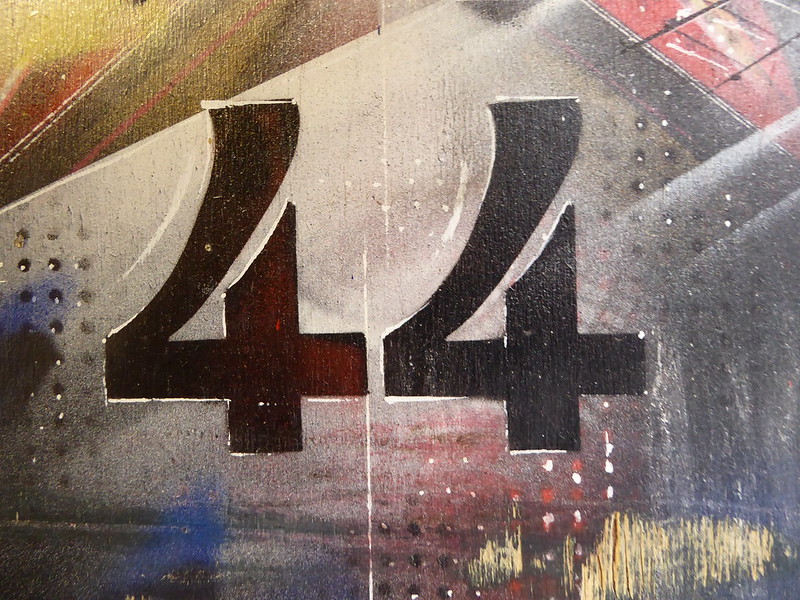
    To Myself On My 44th Birthday…

    Photo credit: Duncan Cummings

    This is a post I started a few years ago, and each birthday I am adding a new insight that I learned that year or some idea that helped carry me through.

    A random assortment of things that I’ve picked up over 38 39 40 41 42 43 44 years, from people, books, and my own experience. These are my rules to live by.

    1. You can’t choose who you love; you either do or you don’t, and you are free to love whomever even if they don’t love you back.  And you can be OK with being loved back or not being loved back.
    2. It is never too late to stop, turn around, and go in the other direction.
    3. Where you live doesn’t matter, and where you live doesn’t bring happiness.  You can be just as happy in a little house in nowheresville as you can be in a big house in a happening place.
    4. How other people treat you has little to do with you.  They are dealing with their stories about you.  Likewise, when you have a problem with someone else, it is really a problem within yourself. You are projecting your own baggage onto other people.
    5. Eat less. Eat unadulterated food as much as possible. Plants. You’ll just feel better.
    6. Try to never make decisions rooted in fear, guilt, or shame.  Choose what you want in your heart and stand by your decision.
    7. God isn’t angry.  He/she was never angry.
    8. You don’t have any problems right now.  Your “problems” are either in the future or the past, and those are just illusions.
    9. Do whatever necessary to protect your sleep rhythms. It heals you.
    10.   Don’t forgive people to make them feel better. Do it simply to liberate yourself.
    11. Cut yourself some slack when parenting.  The things that scarred you are not the same things that will scar your children. Stop trying to extrapolate how every one of your mistakes will ruin your kids’ lives.
    12. Two glasses of wine in one sitting is enough.
    13. Sometimes radical self-care looks like complete irresponsibility in the eyes of others. Just carry on. You know what you need.
    14. Pay attention to your dreams; they can tell you alot about yourself, and sometimes offer glimpses into the future.
    15. Let your children be your teachers: they reflect back to you who you are.
    16. Welcome whoever life brings your way, but intentionally choose who you do relationship with.
    17. Give away most of your stuff. Only keep what brings you joy.
    18. Don’t wait for the perfect temperature; go outside and play anyway.
    19. You can do more than you think you can; it’s all really just a mind game.
    20. Your parents did the best they could with what they knew at the time.  Generally.
    21. Family is not always biological.  They are sometimes found in the most unexpected people.
    22. Find what you’re really passionate about and pursue it with abandon.
    23.   It is possible to find at least one commonality with every single person you meet.
    24.   Jesus was totally right when he said to find yourself you must first lose yourself.
    25.   Working in the hospital can freak you out.  Healthy people get sick.  Get the flu shot. 2021 Addendum: AND the COVID vaccine.
    26.   Cheese and corn syrup are in literally everything.  Read the labels.
    27. Sometimes you need to plan diligently, deliberately. And sometimes you need to be bat-shit crazy impulsive.
    28.  Community is important, whatever that looks like for you.
    29.   Sometimes the scariest option is the absolute best option.
    30.   Just buy the hammock.
    31.   Don’t avoid doing what you really want to do just because no one is there to do it with you.
    32.   Live your questions; don’t demand answers for everything.
    33.   Surround yourself with people of all ages.  Babies and the very old usually have the most sense.
    34.   Don’t hit. Ever. It won’t bring the results you want.
    35.   Don’t punish yourself for making a bad mistake by living with that mistake forever.
    36. People will exploit you only as far as you will tolerate their behavior.
    37.   There is enough.
    38.   Everything belongs.
    39. Sit with a dying person, and really SEE them. It might be the most meaningful thing you ever do, and it might be the only time they’ve ever really been seen for who they are and not what they do.
    40. The obstacle is the path, and the Gospel is not the ability to avoid pain; it is the grace and mercy we are given to be able to hold pain, both in ourselves and for others, without being destroyed by it.
    41. Pursue your authentic self with relentless abandon and don’t be afraid of the unknowingness.
    42. Stop putting other people on pedestals above you. Climb up on your own pedestal and be damn proud of it.
    43. The pain is there to show you something, to teach you something. It is a gift to save you from endless suffering if you can be brave enough to let it be your teacher.
    44. Kierkegaard was right….life is a beautiful mystery meant to be lived and experienced and played and danced, not a problem that needs to be solved.

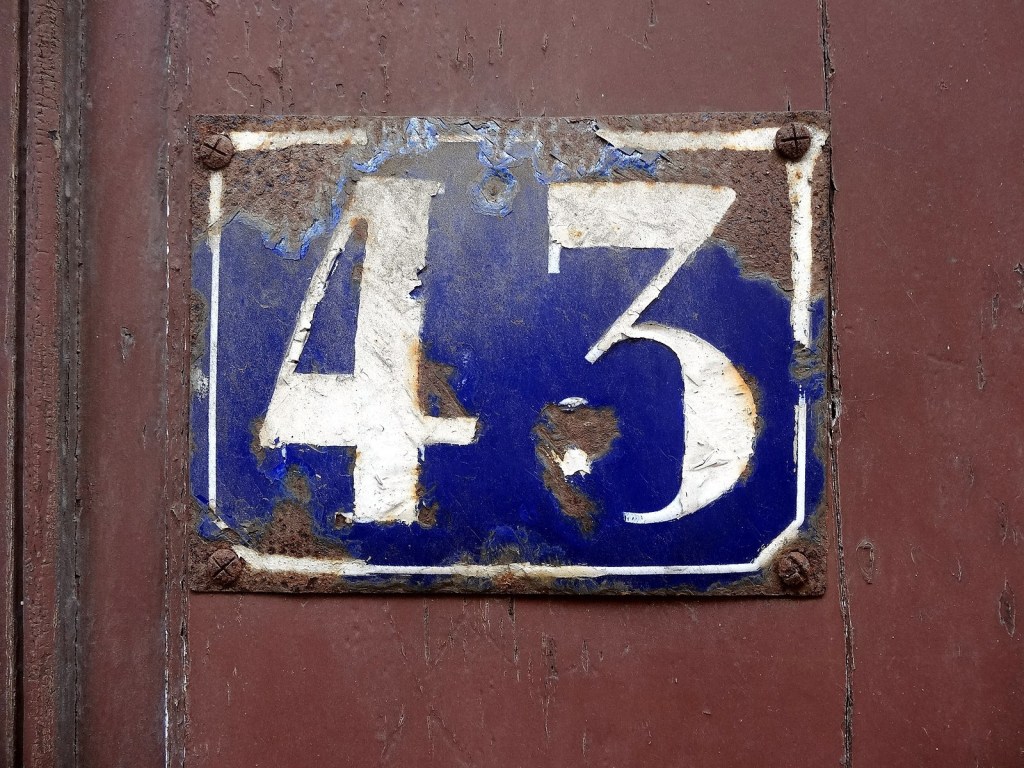
    To Myself on My 43rd Birthday…

    This is a post I started a few years ago, and each birthday I am adding a new insight that I learned that year or some idea that helped carry me through.

    A random assortment of things that I’ve picked up over 38 39 40 41 42 43 years, from people, books, and my own experience. These are my rules to live by.

    1. You can’t choose who you love; you either do or you don’t, and you are free to love whomever even if they don’t love you back.  And you can be OK with being loved back or not being loved back.
    2. It is never too late to stop, turn around, and go in the other direction.
    3. Where you live doesn’t matter, and where you live doesn’t bring happiness.  You can be just as happy in a little house in nowheresville as you can be in a big house in a happening place.
    4. How other people treat you has little to do with you.  They are dealing with their stories about you.  Likewise, when you have a problem with someone else, it is really a problem within yourself. You are projecting your own baggage onto other people.
    5. Eat less. Eat unadulterated food as much as possible. Plants. You’ll just feel better.
    6. Try to never make decisions rooted in fear, guilt, or shame.  Choose what you want in your heart and stand by your decision.
    7. God isn’t angry.  He/she was never angry.
    8. You don’t have any problems right now.  Your “problems” are either in the future or the past, and those are just illusions.
    9. Do whatever necessary to protect your sleep rhythms. It heals you.
    10.  Don’t forgive people to make them feel better. Do it simply to liberate yourself.
    11. Cut yourself some slack when parenting.  The things that scarred you are not the same things that will scar your children. Stop trying to extrapolate how every one of your mistakes will ruin your kids’ lives.
    12. Two glasses of wine in one sitting is enough.
    13. Sometimes radical self-care looks like complete irresponsibility in the eyes of others. Just carry on. You know what you need.
    14. Pay attention to your dreams; they can tell you alot about yourself, and sometimes offer glimpses into the future.
    15. Let your children be your teachers: they reflect back to you who you are.
    16. Welcome whoever life brings your way, but intentionally choose who you do relationship with.
    17. Give away most of your stuff. Only keep what brings you joy.
    18. Don’t wait for the perfect temperature; go outside and play anyway.
    19. You can do more than you think you can; it’s all really just a mind game.
    20. Your parents did the best they could with what they knew at the time.  Generally.
    21. Family is not always biological.  They are sometimes found in the most unexpected people.
    22. Find what you’re really passionate about and pursue it with abandon.
    23.  It is possible to find at least one commonality with every single person you meet.
    24.  Jesus was totally right when he said to find yourself you must first lose yourself.
    25.  Working in the hospital can freak you out.  Healthy people get sick.  Get the flu shot. 2021 Addendum: AND the COVID vaccine.
    26.  Cheese and corn syrup are in literally everything.  Read the labels.
    27.  Sometimes you need to plan diligently, deliberately. And sometimes you need to be bat-shit crazy impulsive.
    28.  Community is important, whatever that looks like for you.
    29.  Sometimes the scariest option is the absolute best option.
    30.  Just buy the hammock.
    31.  Don’t avoid doing what you really want to do just because no one is there to do it with you.
    32.  Live your questions; don’t demand answers for everything.
    33.  Surround yourself with people of all ages.  Babies and the very old usually have the most sense.
    34.  Don’t hit. Ever. It won’t bring the results you want.
    35.  Don’t punish yourself for making a bad mistake by living with that mistake forever.
    36.  People will exploit you only as far as you will tolerate their behavior.
    37.  There is enough.
    38.  Everything belongs.
    39. Sit with a dying person, and really SEE them. It might be the most meaningful thing you ever do, and it might be the only time they’ve ever really been seen for who they are and not what they do.
    40. The obstacle is the path, and the Gospel is not the ability to avoid pain; it is the grace and mercy we are given to be able to hold pain, both in ourselves and for others, without being destroyed by it.
    41. Pursue your authentic self with relentless abandon and don’t be afraid of the unknowingness.
    42. Stop putting other people on pedestals above you. Climb up on your own pedestal and be damn proud of it.
    43. The pain is there to show you something, to teach you something. It is a gift to save you from endless suffering if you can be brave enough to let it be your teacher.

    42 Is The Answer To Everything

    Photo credit: Isaac Bowen

    Have you ever had periods of time in your life where you seem to be hit by a certain theme, repeatedly, and from all directions? And so you decide that maybe the universe is trying to tell you something?

    The first time I really remember this kind of thing happening to me (although I’m sure my memory is failing me), was back in college. I was a double major at a fairly conservative Christian university whose foundation was in the Churches of Christ. One of my majors was Missions, so on top of the requisite Bible classes that every student had to take, I took alot of theology and ministry classes. As a side note, after I graduated and people asked me what I majored in during college, I would respond: “Biochemistry and Missions”. For those who didn’t have a church background or did but weren’t paying much attention at the time, I would often get confused looks and questions as to what a “Missions” major was. I used to be so amused because they would frequently think it was some kind of education track for people wanting to go into intelligence or security. I guess one could make the argument that it was …..stealth intelligence missions for how to bring people to Jesus in ways that didn’t come across as flat-out proselytizing or manipulation. Anyway….moving back to my first point…..

    When I was in college, the theme that hit me relentlessly from every angle was, of all things….baptism. Looking back now, I guess it makes some sense because the issue of baptism is one big point of contention that separates the Churches of Christ from so many other denominations. But at the time, while all the Church of Christers seemed to be talking about nothing but baptism, all the Baptists in my life (the denomination I grew up in) also seemed to be talking about baptism.

    Whether or not the Lord actually was all that worried about me learning the soundest theology surrounding the practice of baptism, and which version would actually get me saved….I have no clue. Ok, I completely doubt that any deity was behind me being pestered with baptism rhetoric. Either way, I was paying attention to all the coincidences and I took it upon myself to do a deep dive into baptism theology and determine what I actually believed about it.

    But…..you didn’t start reading this post to find out what I think about Christian baptism, and it is absolutely NOT the point of me writing today….nor is baptismal theology anything that keeps me up at night anymore. Thank God for that….looking back, the how’s and why’s of baptism are such a small, silly matter to base our entire understandings of eternal destinations on.

    ************************************************************************************************************************

    Does the universe actually coordinate efforts to inundate us with a particular message that we need to hear? I don’t know. Answering that with certitude isn’t so important to me anymore. However, it does seem to me that the same lessons will keep coming back around to us repeatedly until we learn them. One could make the argument that we are attracting these situations to ourselves, and once we get the lesson or receive some healing in that particular area, we stop attracting them. But I don’t know….sometimes it feels completely uncanny about how I run across the same themes or topics from seemingly unrelated sources.

    One theme that has been coming at me again and again over the last year and a half?

    The Hitchhiker’s Guide to the Galaxy. And more specifically…that 42 is the answer to everything.

    I never read the series, didn’t know anything about it, and had only just heard of the title before last year. The first time I ever learned anything of substance about it was when I was in a relationship with Shithead the Narcissist. He brought it up in a conversation, most of the content of which I don’t recall, and for the first time I learned about this magical number, 42. I made a mental note to get a copy of the book, but it slipped my mind until just a few months ago.

    One afternoon, I randomly thought of the book, and the fact that I am currently 42. So I ordered it on Audible and stretched out on my deck couch to listen to a few chapters. After that afternoon I got distracted away by other audiobooks and didn’t get HHGTTG finished. But, within a month of buying the book, I met two new people, who were completely unrelated to each other…and both brought up HHGTTG during my early conversations with each of them.

    Well, I thought to myself….that is either the most bizarre coincidence ever, or the Universe somehow thinks that reading this book will be a game changer for me, or I somehow attract a particular breed of literature fanatics, or the number 42 is on a mission to teach me something, or I’m suddenly paying attention to patterns where I hadn’t before, or……meh, who knows?

    Whatever the reason that this book keeps popping up in various areas of my life, I am paying attention, and it has actually really been the inspiration for some deep thinking on my part.

    ************************************************************************************************************************

    I’ve been on this earth, as far as I can tell and as far as my birth certificate indicates, for 42 whole years. It feels like I’ve lived a few different lives within that timeframe, and yet in the grand scheme of things, 42 is just a mere blip in the lifetime of this planet and humanity in general. I’m not at all the same person I was even a decade ago, and yet in other ways, I am more of that person, in a “realer” way, than ever.

    Back in my college days, while a Missions major taking a bunch of Bible and theology classes, I first learned about how people groups throughout history, including the Hebrews, dervied alot of significance, meaning, and understanding about how the world operates, from numbers and numerology. I recall learning about some important Jewish numeric concepts that were woven into Jesus’ stories in the Gospels, and being delighted over the discovery that all the details included in the texts were there for a reason….they MEANT something. This is especially true in the book of Matthew, the Gospel text that has the most “Jewish flavor.” Certain numbers show up over and over in the Old Testament and Gospels, and carry mystical qualities with them. 3, 7, 12, and 40 are just a few examples that are huge themes in the texts. Equally fascinating to me, although admittedly I don’t know much about it, is how the letters of the Hebrew alphabet are each assigned numerical values in a system called gematria. This system is very important in Kabbalah, the mystical tradition of Judaism, and is used as a method for interpreting the sacred texts.

    But apart from Jewish mysticism, even good old Evangelicals sometimes take a stab at understanding the workings of God by appropriating these ancient tools. Biblestudy.org notes multiple occasions where the number “42” shows up in the Bible. They point out that the number 42 is strongly linked to Anti-Christ themes, but also incidentally note that the phrase “little children” appears 42 times in the Old Testament. Maybe the writer considers kids to be spawns of Satan, I don’t know.

    A quick Wikipedia search lists a plethora of other interesting facts about the number 42, from the realms of science and technology, to literature, music, sports, mathematics, and astronomy. Here are a few of my favorite facts from the list:

    1. With Windows 10, the default timeframe in which you had to change passwords was 42 days. Super random.
    2. 42 is the atomic number for molybdenum, which is an element required in trace amounts by a set of enzymes in our bodies that are crucial for metabolizing and breaking down certain toxic materials.
    3. 42 is the sum of the numbers on a pair of dice.

    I know what you’re thinking. “Julie, just because a number shows up alot doesn’t mean it is extra special or of more importance than the other numbers. Data bias can totally make it seem like 42 shows up in life in a much greater proportion than other numbers.” To which I would say, right on. Although, 42 still has a much longer Wikipedia profile than, say, 63. (I also looked up the number 522, which sadly does not boast its own Wikipedia page. BUT, according to numerologynation.com, if you see 522 alot in life, it’s a good sign that your angels are trying to pass on encouraging messages to you to stay the course and believe in yourself. Do with that information what you will.)

    ************************************************************************************************************************

    My 42nd year, and now this year where I am officially considered 42 years old, have been among the most formative and life-changing for me. Several of my biggest demons have been mostly laid to rest. Some of the puzzle pieces I’ve been searching for, forever it seems, have finally appeared. I’ve grown tremendously in my ability to hold my ground, set up boundaries, walk away from toxic people, and hang tight to those I love dearly even when the holding tight is painful and uncertain.

    Most importantly, this has been the year that I’ve finally grasped that I am fundamentally OK, that I belong in this world and don’t have to ‘deserve” my existence, and that all I need is within myself. At first, I only believed these things for a few short seconds at a time, held within the passing knowing of brief mystical encounters or in the moments when I could accept into my heart what my therapist said was true of me, and not just my head. But as this year has passed, I can believe and hold onto those beliefs for a little longer each time, and as a result, the way I move through the world and respond to the world is changing….slowly but surely.

    One thing that I’ve learned this year doing trauma therapy is that I’m a magical thinker. I’ve always known that I believed in the possibility of miracles and crazy shit to happen in the universe, but I never realized until a few months ago that magical thinking is based way more in trying to survive and and as a coping mechanism than it is solely being way more in touch with the inner workings of the universe than the general masses.

    Along the same lines, I used to think that me being an empathetic and sensitive person was a fundamental inherent quality that helped me truly see others and their pain more deeply and clearly; this also made life a lot more painful for me because I felt the need to help people carry all of their pain. Turns out, while I may have empathetic tendencies, and I do love people greatly, alot of this sensitivity was also a trauma response developed in childhood. I had to learn to be hypervigilant when interacting with people in order to anticipate what might be coming, and to protect myself. Old habits that cut deep neural grooves die hard.

    These, my revelations about magical thinking and hard core empathy, are just two examples of “answers” that came my way in my 42nd year. I’ve had many more. And if I’m honest, there’s this magical thinking side of me that hopes that 42 is the BIG year, where I completely “wake up”, shed the last of my baggage, and live out the rest of my life relatively free of any self-induced suffering.

    But, that kind of thinking, I also recognize, completely misses the entire point. Another, perhaps the most important lesson that I’ve been learning, is that the REAL magic sauce is the “right here, right now.” A specific destination, or reaching year 42 and hoping for some spectacular life alterations, or seeking a final state of enlightenment….those things are always about clinging to some future ideas. The future is nothing but an illusion, a dream. Just as the past is nothing but memories and dreams. Neither exist outside of our minds. All that we truly have is this moment we are in right now.

    The clip from HHGTTG is funny and so very true because it points out the absurdity in much of the way we as humans live. The characters asked for an answer concerning the point of life, the universe, and everything….and were told to come back in 7.5 million years for an answer. When they did come back, they were celebrating hard in anticipation of an answer that was going to suddenly cause everything to make sense and give them ultimate peace. But the exact opposite was true….the answer they received was unfulfilling and left them more confused than when they originally asked their question. Then they were told that to understand the answer they were given, they must ask the correct question, which would require yet another long enigmatic search.

    The big takeaway from year 42 for me is this: ask the big questions, sit in them, and if it feels helpful or you are driven by curiosity, search for the answers. But don’t do that searching at the expense of living fully RIGHT NOW. How many of us spend the bulk of our lives reliving in our minds everything that happened in our pasts, or constantly imagining what could happen in the future…good or bad…so much so that we forget to actually live our lives? Or we become cemented in place, paralyzed with fear of all the “what-ifs?” Instead of joying in sitting next to a person we love and reveling in that time with them, we panic and fret that we will lose them and so spend that precious time trying to convince them not to leave? Or, we can’t fully be with the people and places we are with because we allow our minds to be tortured by words and actions of people from long ago that are not with us now? Or we fritter away our time developing contingency plans for all the terrible things that probably won’t happen? Or we escape to fantasy worlds instead of testing reality and questioning our thoughts/beliefs and discovering that we actually do live in a pretty benevolent universe.

    The answer to life, the universe, and everything is 42….and the answer to 42 is…..just Be Here Now. Live Now. Experience all the things now. Embrace and stop fighting against reality. Love hard the people who are right in front of you, just the way they are, just as you are. Don’t miss out on living life because you are afraid of the things that have come before or might possibly come in the future.

    It occurred to me just now that maybe the theme of baptism does in fact fit in this post. In the Gospel of John, Nicodemus sought out Jesus and answers to the big life questions. Jesus told him that he must be born of both water and the Spirit. It seems fairly clear that being born of water means being born as a physical person into the human predicament. But being born of the Spirit…this gets people hung up.

    “Spirit” in Greek is Pneuma (πνεῦμα). This literally translates to breath. I like this so much because breathing is synonymous with life. The first thing all healthcare providers think about in an emergency is making sure that the patient’s airway is protected, because that balance of oxygen/carbon dioxide inflow, outflow, and distribution are critical to maintaining life. So many of the world’s meditation styles and practices focus on the breath. Practices like Stanislov Grof’s Holotropic Breathwork recognize the connection between breathing patterns and deep emotional and psychic healing.

    Breathing is life. And being born of the Spirit, then, is being born of life. In other words, being born into Is-ness, Reality, the Truth of this Moment.

    Being born of the Spirit means we allow ourselves to come into an existence where we stop struggling, where we stop trying to escape into what came before or what might come later, and we learn to simply love what is. A billion thanks to teachers like Byron Katie who are helping me to gradually understand these things.

    Well, anyway, this is a baptismal theology that I can get on board with.

    As a final note, the number 42 is apparently considered unlucky in Japanese, because is sounds like the Japanese word for dying. I also find this interesting, because in my 42nd year of life, I did so much work that felt like dying. To get to real life, you have to let go of the things that aren’t real and don’t bring life. Our egos and our scared inner children can balk at this, can’t they? Letting go of our old ways of doing things and operating in the world can be daunting at best and terrifying at worst.

    But to harken back one last time to my native Christian language, the apostle Paul….who was a mystic in his own right despite being a bit patriarchal and misogynistic (but I’ll forgive him this), admonished us to leave behind our childish ways…to go deep….to mature in the way we move in the world.

    We are grown ups now. We don’t have to create elaborate systems to help us survive the hard things and difficult people that we once were unable to escape. We possess within ourselves all the strength and love and wisdom we need to live this life well. It might feel like a difficult path to see these things. It might feel like we have to die before we discover what truly living is like. It might take us until we are 42 years old to actually feel like we are starting to “get it”. But that’s ok! Because 42 is the answer to for everything, when you’re 42. And 47 is the answer to everything when you are 47. And if you or I are lucky enough to live to 100, that will be splendid, because 100 will be the answer to everything.

    The ultimate answer is to be where you are, NOW.

    How To Walk Away

    Photo credit: Michal Koralewski

    I’m the worst leaver.

    Like really, the worst.

    I probably come by some of this naturally,, having grown up in the South…where exiting from a family or community gathering is an event in itself, usually culminating in an hour of chatting by someone’s car, with at least one car door opened for that entire time. Sometimes this extends even further….with passengers finally all in the car, but leaning out rolled down windows to chat for just “one more minute”, car engine running.

    If the extent of my leaving problem was just about being reluctant to leave a good time, it wouldn’t really be an issue. But it’s a problem because I struggle hard with leaving the situations that aren’t serving me and the people that hurt me. Fortunately, I’m not the only person that wrestles with these things, and I have some good friends who have been journeying with me over the last several years to face our fears, figure out what is making us stay when we shouldn’t, and learn this Everest climb to pursue what is best for us will not, in fact, kill us like we often think it will.

    The trigger that made me really decide to dig furiously into this struggle of mine was the process of trying to extricate myself from a year-and-a-half-long relationship with a full-blown narcissist alcoholic. Looking back now, I seriously cannot believe why in the hell I ever went on a second date with that man, much less let him treat me cruelly as he did for so long. But at the time, walking away felt like an insurmountable feat, and it took alot of good friends, a fantastic therapist, and alot of ignoring my gut-wrenching despair to get out.

    When I finally escaped that relationship, I was determined to figure out how I got into it in the first place, and learn to never abandon myself like that EVER again. Well, the shadow work involved in unearthing all the reasons why is about as gut-wrenching as being in the terrible relationship itself. And, I’ve learned that you never just stop abandoning yourself cold-turkey. It’s a matter of taking baby steps, and making small choices that start leading you in new directions, and none of it comes easy.

    I’ve have grown so much in the last several years, and while I still have a long way to go in learning to be true to myself, and no longer apologizing for what I want and need, I have stockpiled many lessons that explain so much of the trajectory of my life and help me offer myself a little bit of grace for not always walking away right when I should have.

    I know just enough about trauma theory to get myself into trouble, and I”m not a therapist. And sometimes I suck at taking my own advice. But these lessons ring true with me, and are helping me carve out and curate the life that I want.

    ************************************************************************************************************************

    Before I jump straight into my list of lessons, I have to give a little background on my understanding of how childhood trauma can set you up for failure in adult relationships, as best as I understand it and based on my own personal experiences.

    When you’re a kid, and trying to figure out the world and how it works, you defer to the grownups in your life and assume, for at least a while, that they know what the hell they’re doing and have a general grasp on reality. But then, if you have adults in your lives that neglect you or abuse you in some way, then as a child you’re faced with what can feel like an irreconcilable conundrum: either the adults have to be “bad” or “wrong”, or you do. (I’m oversimplying what I’m talking about to make a point, so just go with it). When kids are faced with this conundrum, I think there are two general directions they feel like they can go. Either one, they decide the adults in their lives are dumbasses or nuts or whatever, and they rebel in some way. Or, the kids make the leap in their minds that adults have more life experience, are “supposed to be loving and good” and, and thus conclude that they [the kids] are wrong, or bad, or the problem.

    The latter was the leap I took in my mind, from a very young age. I think, looking back, that it occurred when I was about five, based on my memories, and it had a dramatic impact on my life. My understanding of reality came to be that if someone was angry or upset with me, it was because I did something wrong. In order to restore relationships and be OK, I had to do the work to fix things. I learned very quickly that with certain people I was constantly being punished when I had no clue what I had done wrong, and so I learned to be uber viliglant with people’s non-verbal cues and to read their vibes as a means of self-protection and to preemptively stave off any surprise attacks.

    The thing about being in volatile or unsafe situations as a child is that you can’t just leave. You depend on the grownups in your life for your every need, and so ultimately, you have to develop copning mechanisms that help you survive toxic situations and keep the peace. You learn to apologize for everything you do, you settle and learn to become ecstatic about receiving crumbs, you start to create a worldview that helps you be OK with the situation you’re in, and you somehow limp along until you reach adulthood, telling yourself this is all normal….and you tell yourself if you could ever just get your shit together and stop being a bad or unworthy person, people would treat you better.

    And so, with that really quick background setup, here are some of the lessons I’ve learned, and am still learning about how to leave anything as a grownup.

    ************************************************************************************************************************1. Stop adoring people.

    Oh man, this is something that my therapist jumps on every time with me. Periodically, I will tell her I ADORE “so and so”, and she’ll get this very specific look on her face and ask me “Why? Why do you adore so and so?” Then, she will sit and wait for me to list all the reasons why I adore that person. I hate this. Because, she will inevitably point out some flaw in my thinking, such as how the person I adore was just doing something that a decent person would do…it was nothing exceeptional like I had made it out in my head to be.

    There are basically two problems with adoring people, my therapist has told me. The first is that that kind of thinking sets up a hierarchy where you view that other person as better than yourself. And when you start viewing someone as better than yourself, you are in danger of losing your own sense of worthiness and are much more likely to settle for that person exploiting you or treating you in ways that are less than you deserve.

    The second problem with putting people on pedestals, is that once you wake up and realize that you’re just as good as the other person, they will often resist strongly and throw a fit when you want to renegotiate your relationship contract….whatever kind of relationship you’re in. People love being adored, and alot of those people don’t like it when boundaries suddenly show up that weren’t there before.

    Value people, observe and appreciate their talents, gifts, and unique offerings to the world, but stop adoring them.

    2. You can walk away from beautiful people.

    This lesson is very closely related to the last one about not adoring people. I have this tendency to stumble across people in my life that I just think are freaking beautiful. They don’t even have to have their shit together. They can be floundering and trying to figure things out and not have any clue which way is up, and yet I look at them and am mesmerized by “the beautiful” in them. (I’m never melodramatic about anything). I’m not just talking about physical looks….it’s some quality that certain people have that I have the darndest time walking away from. For all of you reading that and mumbling “trauma-bonding, much?” under your breath, I good naturedly lift my middle finger to you. I stand by what I said. Some people are just beautiful and that’s all I know.

    And who doesn’t want to stay right smack dab next to what feels beautiful? Except….sometimes just because someone is beautiful doesn’t mean that they are good to be in relationship with. There’s a saying that comes to mind, related to consumerism, but I think it applies here: You can admire it, without having to acquire it.

    If someone is beautiful, but being with that person is hurting you or you are getting too caught up in self-abandoning adoration, sometimes you just have to love that beautiful person from afar. That doesn’t make your love for them any less meaningful. It just means that you get to love them without getting hurt. Maybe things will change and you only have to distance yourself for a while. Or, maybe you will have to distance yourself forever. But you yourself are also too beautiful to endure hurt all the time in the effort to love someone who can’t love you back.

    3. You don’t have to demonize someone to leave them.

    I had a HUGE epiphany a few weeks ago, when I was thinking about the various relationships in my life that I finally was able to walk away from or to at least erect significant boundaries. This was related to me wondering why it takes me so long to walk away from people when I had a good feeling I should have left long before.

    Don’t gag, but it goes back to those coping mechanisms and childhood trauma responses. I suddenly realized that one of the primary reasons it takes me forever to walk away from people, or situations, or institutions when I should is….that I have to figure out a way to make THEM bad, so that I don’t have to be the bad party. And since, historically speaking, I haven’t always held the highest opinion of myself, I have to wait for something pretty wretched and unforgivable to appear so that I can confidently feel I’m justified in walking away and don’t have to potentially carry all the fault within myself.

    This is a terrible way of doing things, ya’ll!!! I’ve eventually walked away from alot of people using that way of thinking, but by the time i had left some terrible things had been done and said to me. Furthermore, where does that leave me when a situation just isn’t serving me but isn’t necessarily abusive or cruel….and I end up hanging out in ambivalence for the rest of my life, unable to move on to something better because I feel extreme guilt?

    Now, some people that i have walked away from were legitiamtely demonized in my mind….they had tangibly and intentionally wronged me…..and I needed to finally step up and name what had been done and flat out called it the abuse that it was, and place the fault firmly on them where it belonged. But not all relationships need to end because one of the parties is a horrible person. Sometimes the timing isn’t right, or the people involved want incompatible things, or a myriad of other reasons.

    I’m finally learning to stop and ask myself…..what is best for ME right now? And I get to be OK with making a choice that feels right for me, no matter how much it pisses someone off, or how much they might want to throw the blame back on me. Or, even in circumstances that aren’t volatile at all, I can choose to go in a direction that I want, simply because that is my perogrative, and it doesn’t have to mean anything about my character, or whether or not I care about other people. I know this is a really simplistic train of thought, but depending on how your brain was molded in childhood, it really can be a completely novel concept.

    4. You might have to leave in baby steps…and that’s OK.

    It took me FOREVER to work up the chutzpah to leave my ex-husband. Like, years. And when I finally did leave, it was more of a situation where I sort of fell off the proverbial cliff rather than confidently striding over the edge. I was able to do just enough work with just enough bravery to gain the momentum needed to finish the deal. There were a few times during the process that I lost my nerve and wanted to stop, but by then, the train had left the station and so I had to stay on for the ride. It ended up being the absolute best decision I’ve ever made as an adult, but it was by far the scariest one, too.

    To my own chagrin, I am way too often a very black and white person. I fight against this constantly, but it’s my default mode. And so, when I can’t make a change cold turkey, or instantly cement a new habit within myself, or just immediately walk away from a person or situation, I feel like I’ve failed. For anyone who has ever tried to leave a relationship, especially if it’s toxic and you have a trauma background, you’ll know how defeating and shaming it can feel when people around you just throw out platitutdes and get impatient or even angry with you for struggling and not being able to make a decisive, clean cut. People who don’t get it are the ones who so callously ask questions like “why would that woman go back to her abusive husband?” or “Doesn’t she know deserves more than that jackass? Why does she keep settling?”

    People that have grown up in families with secure, healthy attachments don’t realize that for those of us who didn’t, changing our coping mechanisms and belief systems feels like a literal, physical battle within our minds. And honestly, it is. We have to carve new neural grooves and pathways in our brains to be able to think in new ways and draw new conclusions. We have to do the hard task of facing the terrorizing fear that if we choose a new path, the other shoe could drop and we could really be screwed. We have to reconcile the fact that often what feels normal and familiar is in fact, not OK or safe, and have to learn to trust that the things that often scare us the most might ultimately be good and safe and healthy.

    You can’t change your brain and habits and beliefs and fears overnight. It takes facing this one small fear, and then resting, and then trying this one new thing, and then resting, and maybe taking several steps backwards before you ever see progress. That’s OK. There are no rules for how you personally need to heal what feels like broken places within you. And the same goes with people….you can leave people how you need to leave them. If it takes you a few tries, that doesn’t mean you’ve failed. (Within reason, people….please don’t read into this ridiculous notions like staying in something where you or your kids are in iminent danger. That’s not what i”m talking about).

    Take however freaking many baby steps you need to, to find your way back to yourself. And don’t apologize for them.

    5. You can save yourself now, and walking away isn’t always final.

    Per my statement about being a black and white person so often….I can’t stand finality. I always want to leave the door open for hope. I still believe in miracles and magic. On one hand, this tendency gets me into trouble alot because I often stay in relationship with people based on the potential I see. (This is another thing my therapist harps on….”Look at reality, Julie. What is staring you in the face? Stop thinking about ‘what could be’ all the time.” My therapist can be annoying sometimes. And I wouldn’t trade her for a million dollars.

    Here’s another throwback to traumatic childhoods: When reality is too difficult to bear, but you know you’re stuck, there are basically two options for how to deal. 1). You do whatever you can to fix the situation and make it better, even if you are putting in all the work to make it better. 2). You zone out into fantasies, imagining what could be or imagining some glorious future where someone will come and save you.

    When you carry this “fix-it’ mentality into adulthood, it is way easier to stay in relationships for WAY longer than you should, expending way more energy than you should. And while there’s nothing wrong with hoping for good things in the future, living in a fantasy world about how great things will be if you can finally just get this one thing fixed, just sets you up for disaster. Especially if the other person isn’t interested in investing in fixing anything with you.

    Something I learned about myself way too late was that I have the power and freedom to walk away from things; I DON’T HAVE to try and fix them if I don’t want to. But this requires another one of those neural groove pathway carvings in the brain I mentioned earlier. It’s hard to actually believe this for the first time when it goes directly against what you’ve believed your entire life. I have this analogy in my head that illustrates the way I approached life as an adult for way too long. For whatever reason, I accidently touch a hot burner on a stove. So, I scream in pain and cry and beg for the person next to me to come turn off the burner, or I wait for someone to come save me and pull my hand off the stove. When really, all I have to do is pick up my hand…MYSELF. This is all so juvenile, but if you grow up with a mindset of being trapped and always hoping for a savior that never comes, it is REALLY hard to suddenly change your perspective and realize that you can save yourself now.

    But back to the finality part…I don’t like to leave people. I get attached to people quickly and easily, and I tend to be overly loyal. And I’m always afraid that when I walk away, that it means forever. For some people that are so very important to me, that thought of forever feels viscerally painful and unbearable to me. This is the important thing, though: with some people, that walking away will be forever, and that will be the healthy thing. But for others, it might just mean a walking away for right now. A walking away until we can both do the work we need to do on ourselves. A walking away so we can find each other down the road in a new capacity. When I despair about walking away from someone I care about, assuming that everything is final, that is me once again arguing with reality and living in a fantasy. I have no clue how the story will end….and the goal is to remain curious in that not knowing.

    **********************************************************************************************************************

    I hate leaving people, even those necessary endings. I hate having to lay down loyalty to relationships and organizations or institutions that I have valued for a long time. But now, finally, at age 42…I’m realizing that I’m tired of staying in things that feel painful, when I don’t have to. I’m not a little kid anymore. I don’t have to rely on anyone for surivival. I can walk away from things, even when it’s hard, and I’ll be OK, and it’s through walking away from the hurtful things that room is left for the good and healthy things to enter.

    ***********************************************************************************************************************

    Please, remember me happily
    By the rosebush laughing
    With bruises on my chin
    The time when we counted every black car passing

    Your house beneath the hill and up until
    Someone caught us in the kitchen
    With maps, a mountain range, a piggy bank
    A vision too removed to mention

    But please, remember me fondly
    I heard from someone you’re still pretty
    And then they went on to say that the pearly gates
    Had some eloquent graffiti

    Like “We’ll meet again” and “Fuck the man”
    And “Tell my mother not to worry”
    And angels with their gray handshakes
    Were always done in such a hurry

    And please, remember me at Halloween
    Making fools of all the neighbors
    Our faces painted white by midnight
    We’d forgotten one another

    And when the morning came, I was ashamed
    Only now it seems so silly
    That season left the world and then returned
    But now you’re lit up by the city

    So please, remember me mistakenly
    In the window of the tallest tower call
    Then pass us by but much too high
    To see the empty road at happy hour

    Gleam and resonate just like the gates
    Around the holy kingdom
    With words like “Lost and found” and “Don’t look down”
    And “Someone save temptation”

    And please, remember me as in the dream
    We had as rug-burned babies
    Among the fallen trees and fast asleep
    Beside the lions and the ladies

    That called you what you like and even might
    Give a gift for your behavior
    A fleeting chance to see a trapeze
    Swinger high as any savior

    But please, remember me, my misery
    And how it lost me all I wanted
    Those dogs that love the rain and chasing trains
    The colored birds above their running

    In circles ’round the well and where it spells
    On the wall behind St. Peter’s
    So bright on cinder gray and spray paint
    “Who the hell can see forever?”

    And please, remember me seldomly
    In the car behind the carnival
    My hand between your knees, you turn from me
    And said the trapeze act was wonderful

    But never meant to last, the clowns that passed
    Saw me just come up with anger
    When it filled with circus dogs, the parking lot
    Had an element of danger

    So please, remember me, finally
    And all my uphill clawing, my dear
    But if I make the pearly gates
    Do my best to make a drawing

    Of God and Lucifer, a boy and girl
    An angel kissing on a sinner
    A monkey and a man, a marching band
    All around the frightened trapeze swingers”

    This Is When It’s Time To Die

    Photo credit: Hartwig HKD

    An Easter morning post in which I start with theology, hit on the death and resurrection archetype a bit, and then explore how dying to what we’re most afraid of might be the crux of trauma healing.

    (See what I did there….crux….cross….Easter weekend?)

    **********************************************************************************************************************

    For someone who no longers really identifies as “Christian”, I think about resurrection alot. Every single Easter, whether I’ve been in church or not, it’s an event I ponder. Years ago, as a child, it was a story about divine magic….where a good person unfairly killed is brought back to life, and somehow Easter Eggs and bunnies are involved. As I grew older and had heard enough warnings about the straight-line trajectory towards hell I was on if I didn’t make some good decisions and fast, it was a story about someone who was half God-half man who had to die a barbaric death, but in doing so, he gave me a chance to escape hell and retribution from whatever horrible crimes I had unknowingly committed at that young age. My understanding of this story grew and morphed as I entered adulthood, and through the works of N.T. Wright, I came to believe that Jesus’ death and resurrection was less about appeasing a pissed off God the Father and more about breaking power and control held by forces opposed to God and Jesus as the ONE, TRUE, King. Then, gradually, I became an atheist. Not in the popular sense of the word, but rather taking on the belief not in a theistic sort of deity, but rather, Tillich’s Ground of Being….a source or energy or “Is-ness” that permeates and envelops all things. Once I got to that point, I was flummoxed on how to deal with the story of the resurrection or what it meant for me on a personal level. But I always felt that there was something deeper to the story of Jesus’ death and resurrection for me to gather up…..that goes way beyond someone physically dying and returning to physical life in this particular existence.

    ***********************************************************************************************************************

    Christians tend to think they have a monopoly on deities dying, even by crucifixion, and then being brought to life again. We also tend to think Jesus was the only virgin birth story. Not true. But people can get hung up on these misconceptions and then think that Christianity is completely true, above all other religions or faith systems. While Judaism and Christianity have unique offerings to give the world, they don’t hold a trump card on all things spiritual or ultimate truth. I’ve become pretty convinced that there are multiple paths up the mountain, and they all lead us to the same place at the peak. There’s some deeper metaphor present in that metaphor, but I’ll leave it be for now.

    There are many ways to read and interpret religious texts, and to understand great religious heroes. For example, there is a literal reading of the text…where one believes that everything has happened or will happen literally and exactly as described within the pages. This, as many scholars have pointed out, is really the lowest level of approaching texts. Taking everything literally produces a very flat result that is applicable to only a small set of people, or it sets up a dualistic, exclusivist belief system.

    The next levels are implied, allegorical, and hidden or mystical levels of meaning in a text. These levels of reading religious texts require more engagement on the part of the reader. The mystical understandings of texts require learning to see and understand in new ways, and often require one to sit with a passage for a long time before any kind of understanding comes. And it’s the mystical level of understanding where you can read many of parts of the Bible, and other texts, and suddenly realize….they’re all pretty much saying the same thing.

    So, without diving too deep into alot of this, because also….I’m not an expert in this field, I want to look at a historical interpretation of what happened to Jesus, and then look more broadly at what his story means for each of us to do. And no, its not about saving us from a literal hell if we believe the right things.

    ************************************************************************************************************************

    Jesus was born into a peasant class, nothing fancy. It appears he grew up with a penchant for spiritual things and was pretty wise as an adolescent. As an adult, he had some powerful mystical experiences that seemed to solidify his decision to help liberate people who were oppressed not only by the Romans, but by bad religion. He renounced worldly wealth and possessions, and went around tending to the physical, emotional, and spiritual needs of the poor, marginalized, and disenfranchised. In so doing, he pissed off alot of people. The Jewish religious institution was angry because Jesus called them on their crap, and exposed their fake religiosity. The Romans were angry because people who are liberated, even psychologically, en masse, can be a real threat to the stability of a tyrannical empire. Like so many others who have walked similar life paths, the only way for them to deal with the problem of Jesus was to fabricate crimes that he supposedly committed and kill him.

    So, Jesus was crucified….again, nothing terribly special about that…it was a common torture tactic used by the Romans. Did he actually rise from the dead….physically? Well, who knows. And honestly, that is kind of a boring question to me now. What is more interesting to me is honestly the fact that a Christian myth grew out of this, and myths often give insight into what is really the truest true. Richard Rohr talks about this alot….that something doesn’t have to be literally true to still be very true.

    Jesus’ death and resurrection serve as an archetype…(an archetype is a pattern that periodically shows up among people, that carries alot of wisdom and can give us clues on how to move forward down the path of life.) The first main lesson that I think this story about Jesus is ultimately trying to teach is that even when the physical body dies, the “Is-ness” that was at the fundamental and most basic core of that person, is not destroyed but continues. Is-ness is like energy…or maybe we could actually just call it energy….it can’t be created or destroyed. It just “is”.

    A second point of this story, I think, is to explain that overcoming….conquering in life over the things that most hold us back, requires a death. This isn’t a physical death, but rather, a death to the ego, a death to the belief systems we hold, a death to our dreams and all the ways we “think” the world should be, how people “should” have been. Although, I will say that I have personally witnessed this ego death occur in people just days before actual physical death. It was as though they realized what was inevitable, and they suddenly experienced a deep realization that there was no point fighting or grasping or clawing for what they wanted anymore, and so let it all go. When they were able to let go, they immediately become different people…full of peace, lacking any worry, and only able to offer love. Seeing this happen right before my eyes has been one of the most redemptive experiences of my own life.

    ************************************************************************************************************************

    Easter came about right when I’ve been doing alot of thinking on trauma and how to heal from it. It’s so easy to suffer abuse or trauma of different forms and stay stuck in a victim mentality. It’s easy to blame others for how you’re struggling and use your pain as an excuse for not moving forward. It’s easy to cower behind our great individual fears and try to isolate ourselves away from every having those fears triggered. And I totally get it. I understand it. No judgment here.

    In my personal experience, though, life isn’t about letting us just stay where we are. It won’t have it. Life, at least in my own situations, loves to bring the same lessons around again and again and again until I decide to change my responses.

    The other thing about life is that generally speaking, bargaining doesn’t work. We like to treat life as though we are in a social contract….if we do x, then life should offer us y. But there is no contract with life, much to our consternation, other than a great invitation by life to stop clinging to our attachments and engage with whatever comes our way. The book of Job is another great archetypal story, and another book that I really don’t think should be taken literally. Who cares if there was an actual Job? There are a billion Job-like examples that have populated the earth since him and will continue to do so in the future. Job was a righteous man, was wealthy, had a big family, and generally had it made in life. Until everything fell apart and he lost it all, including his health. This book in the Bible actually attributes it to Satan asking permission from God to test Job and see if would turn away from God. (Let’s remember this was the worldview at the time, and not that Satan actually approached God, and God did not flippantly toy with a man’s life just for the hell of it). In my mind, the story of Job was a death and resurrection story just like that of Jesus. I don’t think Job was as concerned about losing all he lost as he was bewildered as to why it would all be taken from him if he had been a good man and had done all the right things.

    If you haven’t read the book of Job, go back and read it. But as many will know, Job sat in the dust and ashes, confused and hurt and tormented. His friends tried to offer explanations for what had happened to him. (Many commentators consider his friends to be jerks, but honestly, they were just doing what everyone does….we try to figure out why bad things happen to good people….and often even a bad explanation feels better than no explanation). The book goes on for quite a while with alot of Job pining and his friends pontificating, until finally, God steps in and shuts it all down. And again….I don’t take the text literally. I don’t think God boomed down in an angry voice from heaven that Job had no right to complain because he was just a pansy human being. I think the poetry that describes God’s response was a mystical experience, where somehow, Job was able to let all of his anguish and “need to know” go. Again, this is not a new story. There are so many people who have experienced horrible tragedies and suffering, and at some point, they are able to let go of attachments and the need to understand everything to the nth degree….and they just let life come to them as it will, and they stop wrestling. Somehow they identify with their fundamental “is-ness” within themselves and it changes everything. I think Job had a resurrection on the other side of this death….the literal reading of the story makes it sound like he got all of his wealth back and had more children, but I’m pretty sure that that part of the story is also allegorical. I think it means he found everything he needed on the other side of his ego and attachment death….more of a spiritual and emotional wealth than physical wealth. At least, that’s the way I read the book of Job. Do with it what you will.

    ************************************************************************************************************************

    Going back to trauma and core wounds. I’m pretty sure we all have core wounds, and I think trauma just exacerbates the hell out of them, often paralyzing us and cementing us into unhelpful archetypal patterns that we repeat over and over.

    I’ve been going to therapy for a billion years, it seems, and have tried all kinds of stuff. The thing is, I know what my core wounds are, I know how they got there, I know what triggers me, I know my stupid patterned responses, and I know what I’m really afraid of in life. But the thing is, just knowing all of this information doesn’t always fix things….it doesn’t always help me make different choices or respond differently to stimuli. Knowledge in the head does not always translate immediately to transformation in the heart and body.

    I’ve been realizing over time, that truly getting over trauma and core wounds requires dying. I’m sure I haven’t finished thinking this all through, but I think there are two bigs deaths you have to go through to get better. (I’m generalizing here, I’m not a therapist, and I’m processing myself in this post to work through my own crap….so I ask for grace if my logic doesn’t entirely add up).

    1. The first death, is the death of being able to keep going back into your past and hashing up every single memory of the people and things that hurt you, and trying to process every one. Now, having done therapy for said billion years, there is definitely a time and need to go into the past and look at things head on, acknowledging what was done to you and how it hurt you. But, as my current therapist and I have talked about, at some point in your journey, you have to let the past go. You have to let go of the urge to remember and process every horrible thing that had ever been done to you, or to gain more and more validation ammunition against your perpetrators for wrongs. At some point, doing this just stops being useful and it keeps you from moving forward. And, I’m pretty sure the ego begins to love it at some point and attaches to the dopamine hit of being able to pinpoint one more time when someone hurt you and you were in the right and they the wrong. Yeah, they were in the wrong….they hurt you, sometimes attrociously. But you’re not there anymore and you have this great invitation to live the life before you without paying those people any more mind. But, again, this feels like a death, for a while.
    2. A second death I see in healing from core wounds/fears is that I think we have to face out greatest fears by dying to our constant striving to keep them from happening. We have to allow those fears to actually potentially come about, and find out if we can make it to the other side.

    I should say upfront, I don’t like this second point at all. But I am feeling more and more certain lately that this is the place I have arrived to in my own life. Here’s a little transparency. My greatest fears of all time are that people will abandon me/ forget me and that I will be alone (and in my mind, there is a belief that being alone is a bad thing). These two fears were totally exacerbated by trauma in my childhood, and so they have become these two big monsters I fight on a daily basis. I struggle hard with anxious attachment to people. I work way too hard with way too crazy of a schedule, sometimes doing ridiculous things, in hopes that if I keep doing things to prove my usefulness in the world, I won’t be forgotten. I can go way over the top doing things for people, inconveniencing myself tremendously without good boundaries, because I think if I provide some value to people I’m in relationship with, they’ll do a cost-benefit analysis and decide they’re getting too much good out of me to outright abandon me.

    These are totally irrational fears, I know. The important people in my life….the ones that really love me, have not forgotten or abandoned me. The ones who have abandoned me, were never really there for me in the first place…..they were basically just ghosts in my life. But again, I know these things in my head….but they haven’t quite made it to my heart, yet.

    I’ve been listening to an amazing podcast called This Jungian Life lately, and several of the episodes enabled me to have a come to Jesus meeting with myself. Basically, the conclusion was that all of my grasping and striving and working myself to the bone hasn’t gotten me anywhere. I can’t make people stay in my life if they don’t want to be there. Yet I do these things because the possibility of being completely forgotten or abandoned (OR WORSE: BEING BLOWN OFF OR COMPLETELY IGNORED), makes me think (albeit irrationally) that I will physically die. The second half of my conclusion was one of those deep gut knowings that it’s time for me to die to the grasping and striving. To let myself die to the fear of physically dying from being forgotten and left alone. Basically, the only way I can heal from my trauma and wounds is to give space for those exact fears TO HAPPEN. To allow myself to be forgotten. To allow myself to be abandoned. To allow myself to potentially be left alone. Right now, I can’t see any other way forward but to consciously make the choice to die to the ability to keep scrambling to protect myself and curate life the way I think it needs to be for me to be OK.

    Ugh. I don’t want to do this. But, what I’m currently doing isn’t really working, I’m wicked exhausted, and if anything, my trying to avoid my traumas is only continuing to attract people who are more than willing to abandon me or ignore me.

    ************************************************************************************************************************

    Transitioning back to the archetypal Jesus. Jesus knew that he was about to die….that it was an inevitable next step in his journey. And it was a painful thing for him to acknowledge as well, so I feel a little comforted. I mean, who likes to die, even if just figuratively. When he was in Gethsemane, he asked God that if there was any way possible, to please provide an alternative.

    Then, as you all know, he was tortured and then crucified, and the Scriptures make it pretty clear that he felt the immense agony of having to face that death alone, and he couldn’t even find God in it. The familiar comfort, the Divine assurance he’d always had, was taken away.

    This is a sub-archetypal story I’ve heard so many spiritual teachers allude to. These deaths….the deaths of ego and clinging to things that feel certain….these are the deaths you have to do alone. And sometimes you have to let go of any assurance that things will be OK in the end and you’ll resurrect on the other side. If I let go of my grasping, will I be forgotten? Will I end up alone for the rest of my life? Will my life even matter? Shoulders shrug.

    So, this then, is my ultimate takeaway, mostly for myself, in this post on Easter Sunday: the story of Jesus’ death and resurrection is the hope, not that we will be spared from a literal hell or get to go to a literal heaven. It is the archetypal promise, offered by so many others as well, that the deaths we have to go through on our journeys are hard and painful and lonely, but they aren’t in vain. When we allow those things that scare us most to be possibilities in our lives, they lose their power and we resurrect on the other side with a greater knowing of our “is-ness”, and the ability to welcome, accept, and maybe even love whatever life brings to us because we know we’re going to be OK.

    At least, this is what I’m pretty sure about. I’ve experienced alot of little resurrections in the past, so I’m doing my best to trust that I’ll come out OK on the other side of this things that feels like a huge, scary death to me. It’s my resolve this particular Easter to stop grasping and clinging, to allow the dying process to strip away what isn’t real, and to hope for that resurrection.

    Groundhog Day and Embracing Your Humanity: Part I

    Remember that old Bill Murray movie, Groundhog Day?

    Of course, you do. Everyone knows that movie. I only ask because I was probably the only person in the entire world who hadn’t seen it until last year, and so never appreciated its full relevance. I’m hoping maybe there is one other person out there who falls into my camp of not having seen all the “wait, you’ve never seen that movie?” movies.

    In case that one person does in fact exist, the story is about a weatherman from Pittsburg who goes to a small town to forecast about the “weather rat”, which he is really not thrilled about. And lo and behold, he wakes up day after day in that small town, reliving the same day over and over, watching people do the same things again and again. He comes to believe he is doomed to live an eternity of that repeated Groundhog Day in that same little town. While watching the movie I almost had a panic attack on his behalf…..because….honestly, that movie portrayed pretty much what I used to think heaven was going to be like. Dreadful stuckness in the same thing over and over and over and over.

    Anyway, this post is not about heaven or any of my waxing on about theology. In fact, it’s not about looking at all into what happens after we die, but squarely on what is going on with us right here and right now as we struggle in this existence called “being human.”

    The last few weeks have sucked, to say the least. The kind of suckiness where stuff on the outside looks good enough, but my internal state was a mess. Where you have those occasional fleeting moments of wondering if absolutely anything is worth it. Is any progress being made? And thinking that maybe the whole state of being alive is just absolutely absurd, and to quote the book of Ecclesiastes, “Everything is meaningless, a chasing after of the wind.”

    My life frequently feels just like the proverbial Groundhog Day. The details may be different, but damn it, sometimes it just feels like I”m repeating the same scenarios with the same kinds of people and the same kinds of situations with the same kinds of outcomes….over and over and over and over. It feels SO exhausting. Can I get an amen? Nothing can make me want to go crawl back under a rock more than this doomed feeling that I will never conquer my demons, that the wounds that have plagued me from childhood will never be healed, that I’m destined to keep repeating the same mistakes until who knows when. That is the feeling that will drive you to drink or never want to get out of bed or consider rummaging around in your old prescription pill stash.

    I have this one little problem, though, that gets in my way alot. It’s called hope. I’m not entirely sure where I get it from, but it might be from my good friends who encourage me to try one more time, who remind me of things I’ve forgotten about myself, and who I’ve seen valiantly fight their own internal wars without throwing up the white flag. Hope makes me want to try something new, one more time. It makes me want to read one more self-help book, one more time. It makes me want to basically just get up and do the next thing, one more time.

    I lost sight of hope for a while lately. All I could see were my Groundhog Day screwups, all I could hear were the thoughts in my head churned out by self-loathing rumination, telling me I’m exactly the same person I was decades ago and I hadn’t made any improvements or gotten anywhere. But then, kind of out of nowhere, I (assuming my truer self) asked myself if these thoughts were really true. Is it really true that over the last many years I have made no real progress in my life? People sometimes point to these things I’ve accomplished externally, but honestly, most of the time I just feel like I’ve gotten really lucky or been in the right place at the right time, so that kind of encouragement hasn’t always helped me feel OK about myself.

    Anyway, in this moment of clarity where I decided to remember that my thoughts about my Groundhog Day doomed-ness might be wrong, I decided to actually sit down and see if I could think of any ways that I had tangibly grown as a person over the last couple of decades. To my surprise, a few things came to mind that I hadn’t considered before. After writing a Top 10 list, I realized I have in fact grown alot as a person. I’m spiraling upwards instead of downwards, and maybe my journey hasn’t been nearly as absurd as it sometimes seems to be.

    Below is my Top 10 list…it’s me getting real and transparent, so that maybe it will somehow give you permission to be able to look at and one day talk, without fear, of your own dark places.

    ************************************************************************************************************************

    1. I no longer have horrible sleep attacks.

    Since I was a child, until about 6 or 7 years ago, I used to have horrible sleep attacks whenever I got in trouble, or was yelled at by an adult, or generally felt strong, overwhelming emotions. Looking back now, it was a coping mechanism that I developed to protect myself, but it really incapacitated me over the years. There is nothing worse than feeling like you absolutely have to go to sleep when you’re in an environemnt where it is unacceptable to do so, or going to sleep will only bring on another onslaught of getting yelled at.

    As an adult I was initially diagnosed by a sleep pulmonologist as having a form of narcolepsy. He prescirbed me meds that would keep me from being able to doze off, but did nothing to relieve those horrible attacks of sleepiness. Later, a sleep neurologist said she didn’t think I had narcolepsy, but I had an idiopathic sleep disorder. Meaning, there was something amiss, they just didn’t know what was causing it.

    At some point about 6 years ago, as I mentioned, these attacks just went away. I can now sit in a day long conference or workshop and not doze off. I no longer feel like i need to take daily two hour naps. I don’t feel like I’m going to konk out when someone screams at me or otherwise voices their displeasure at something I did or said. I’m not exactly sure what caused the change….maybe it was finally the culmination of years of therapy, maybe it was going vegetarian, maybe it was relinquishing the limiting theology of my youth….I don’t know…I’m just so glad that this torturous part of my life has left.

    2. I don’t stutter around strangers, or when I feel uncomfortable, anymore.

    My grandpa had a stutter most of his life. The only time it went away was when he sang. When I was little, I never really thought anything about it; it was just how he was. My dad took forever to tell a story or finish a thought, and my grandpa struggled to get some of his words out.

    When I got to be in high school, I guess it was, I started developing some sort of weird speech impediment when talking to strangers or people that I didn’t know well. It wasn’t a “true” stutter, but I would fumble and trip over words and end up just looking and sounding like a real idiot. It was so incredibly embarassing, and I never knew exactly when it would happen or how many sentences I had to force out for it to resolve. Honestly, I don’t know how many people even really noticed it, but it was so painful for me. Looking back, I think it stemmed out of uncertainty about what I wanted to say, and never feeling like I knew if what I wanted to say was competent or worthwhile, and whether it would be appreciated or rejected.

    I’ve pushed and pushed through my fears of talking to people I don’t know, and talking in front of people. I’ve practiced really hard at learning to do small talk, dive into deep things, and generally be a good conversationalist. And it occurred to me a while back that I only have speech hiccups every once in a while, and I”m no longer terrified of looking like a moron when I open my mouth to say something. This feels huge for me.

    3. I don’t self-mutilate anymore.

    Y’all, this is something that only one, maybe two people, in the world have known about me. Because self mutilation, in whatever form it takes, carries so much freaking shame. Shame for hurting your body, shame of what people will think when/if they discover it, shame that you’re not even sure why you’re doing it, and shame that somehow physical pain makes your emotional pain lessen for just a little while.

    My brand of self mutilation was easier to conceal than some forms others take, but the physical pain that came from it was brutal and would last for days. I started when I was in junior high and kept at it until right about 7 years ago (seems to line up with my sleep attacks a bit, huh?). I don’t even really understand how I was able to stop hurting myself, other than to realize that the urge has pretty much disappeared. All I can say is that this was a Groundhog Day nightmare that I am so very grateful has finally resolved itself. And side note: if you encounter someone who cuts or self mutilates in some way, show them some compassion. You have no idea how much pain and shame they are already carrrying around.

    4. I no longer binge eat myself into food comas.

    I don’t really want to delve into this topic all that deeply, other than to say that most of my life I’ve had a very disordered relationship with food. People often don’t believe this, telling me that I’ve never been all that heavy, even when I was about 20 pounds overweight. People will also tend to mnimize my excitement over losing 5 pounds, too. Not cool, especially when they’re just assuming I’m phishing for vanity compliments. One can be struggling in a raging battle against food all the time even when they’re at a healthy weight, so be kind. Also, stop offering snark to people who become vegetarian or vegan, and stop with all the damn meat jokes. Sometimes it’s changing to a different style of eating that saves yoyur life and helps you drop some of the shame load.

    5. I no longer feel like I’m going to die, or literally want to die, any time that someone gets angry with me.

    I have always really, really struggled with people being angry at me. It can undo me, even if I know they are completely in the wrong and really have no grounds for being angry at me. In the past, I just couldn’t handle it and would really have preferred to just to die and be done with it than having someone upset with me in any way. I think this is probably where my sleep attacks came in…I couldn’t actually die to escape the anger, so maybe escaping into sleep and unconscioiusness was the next best thing.

    I still hate it alot when people are angry with me, but it feels survivable now. It feels more doable to apologize and move on if I was in the wrong, and also to not automatically assume that just because someone is angry at me, that I actually did anything wrong. I can now understand, and actually believe it, that dying is probably a very disproportionate response to being on the receiving end of someone’s anger. It’s really nice to believe that anger is temporary and not sure-fire evidence that I am inherently a horrible person.

    6. I now have a level of body security I never had in my early 30s and before.

    I’ve written about this some in past blog posts, so am not going to hash it out all again, other than to say that I now know I am just an average person. It is SO GOOD to just be average. The first three decades of my life consisted of me believing that somehow my body was jacked up (in what way I had no clue) and needed to be hidden away from the world. There is nothing worse than carrying around shame and you have no clue what you’re supposed to be ashamed of, and yet there it is anyway.

    Take away from working in healthcare, doing sexual assault nurse examiner training, therapy, etc: We NEED to do a way better job of teaching our children that there are so very many different permutations of NORMAL in the human body….because we could save so many people years of shame and trauma if we did so.

    7. I no longer panic when I have to speak in front of people.

    This point is really ironic, because I’ve performed or spoken in front of people my entire life. I was on the debate team in high school and college and played piano in church and all of that. But I pretty much hated it the entire time. Everytime I had to get up in front of people I would have to plan on not eating for hours ahead of time, keep a box of immodium handy and be in eyesight of a bathroom, and be ready to bear the embarrassment of my chest and neck flushing bright red when it was my turn to “be on”. It’s weird, because sometimes I chose these activities, and other times I was forced into them by adults in my life. I think ultimately, I knew I wanted to be a good speaker, and I didn’t want to be afraid to get in front of people. And I’ve pretty much gotten there….but man, was it a painful road to travel in order to arrive.

    8. I’m no longer terrified of doing things by myself.

    For so much of my life, I avoided doing things that I really wanted to do because there was no one to do it with. It always feels like there’s safety when doing things with a partner or group, because if you end up looking like an idiot, at least you have people with you to help offload the burden of carrying the entire amount of idiiot-ness by yourself. But, I’ve learned that if you wait around for someone to do the stuff with you, you might wait forever and then end up missing out on some amazing experiences. I’ve also learned that sometimes doing things by yourself is just WAY better than doing it with other people. But even better than that is knowing you have the choice: you can do something cool or have an adventure by yourself….or you can do it with people….and both could end up being unique, amazing experiences.

    9. I am now aware of most of my trauma responses in the moment, instead of recognizing what happened down the road.

    I feel like the first three decades of my life were basically on autopilot. Things happened and then I reacted to them. Most of the time I don’t think I knew why I did have the things I did….the actions just seemed to be good ideas at the time and made sense in my head.

    Now days I feel like there has been a major shift in how I approach life and what comes my way. In general, I have a pretty solid grasp on the things that hurt or trigger me, and why they hurt or trigger me. As I’ve alluded to in this post, not every trigger undoes my like it would in the past. And for the things that do undo me? While in the moment of being absolutely undone, I am able to observe what is going on and name it. I might not be able to do a damn thing about it in the moment, and I may feel powerless to respond in a different way, but at least I can see what is happening instead of identifying completely with the situation and my feelings and thoughts. Out of any of the ways I’ve grown over the last couple of decades, I think this has been the most important. Because….if I can recognize what is happening in the moment, I have more agency to be able to stop reacting to stimuli and start altering my responses.

    I honestly hate alot of this. I hate how people and things can intentionally or unintentionally stab me in the most vulnerable places and still bring me to my knees. But, I’m so grateful that it’s no longer a battle that I have to fight completely blind. I know what my real enemies are, and I’m gaining a pretty decent arsenal of weapons to use in various situations to overcome these trauma beasts.

    10. I am learning to let what brings me joy, bring me joy.

    I’m a nerd. It’s just a fact. I also get super excited and giddy about some things that appear to have no effect on others. This used to really bother me. I felt like if something was really important to me, but didn’t do much for others, then maybe it was actually meaningless after all and I was dumb for allowing it to make me happy. Maybe I was just being juvenile and childish.

    Now…I say, to hell with that. If something makes me happy and I want to get excited about it, then I am going to allow myself that joy even if everyone else thinks I’m a nut job. I am wired to find joy in things that other people might not be wired for, and that’s OK. And as I talked about in my last blog post, it could be argued that what is important is not so much the inherent meaning that something carries it, but rather meaning that is ascribed to it.

    I spent a huge chunk of my life trying to be interested in the things that I thought I was supposed to be interested in, based on others around me. Nothing is worse for the creative soul than trying to force yourself to be interested in something that feels like cardboard to you, or stifling interest in things that make you want to get out of bed every morning…just because they aren’t interesting to the world around you. I’m finally learning to follow the words of Joseph Campbell, as recorded in a interview with Bill Moyers:

    All the time. It is miraculous. I even have a superstition that has grown on me as a result of invisible hands coming all the time – namely, that if you do follow your bliss you put yourself on a kind of track that has been there all the while, waiting for you, and the life that you ought to be living is the one you are living. When you can see that, you begin to meet people who are in your field of bliss, and they open doors to you. I say, follow your bliss and don’t be afraid, and doors will open where you didn’t know they were going to be.

    ************************************************************************************************************************

    So there you have it, my Top 10 list significant ways I really have grown, changed, and healed as a person. Making this list was really cathartic for me, and reminded me that it is really dumb to believe the negative thoughts coming down the pipeline, or to fall into an all or nothing mindspace when something goes wrong in life.

    This post has been part of this idea that I want to talk about on embracing our humanity….to lay a foundation for what I plan to expand on in the next post…..1 degree changes, future grace, why hedonism has it’s place, and totally stealing and then repurposing (hopefully in a healthier way) ideas that I picked up years ago from John Piper. (Just hang with me , peeps….I’m not endorsing his theology). 😉