A random assortment of thing that I’ve picked up over 38 years, from people, books, and my own experience. These are my rules to live by.
You can’t choose who you love; you either do or you don’t, and you are free to love whomever even if they don’t love you back. And you can be OK with being loved back or not being loved back.
It is never too late to stop, turn around, and go in the other direction.
Where you live doesn’t matter, and where you live doesn’t bring happiness. You can be just as happy in a little house in nowheresville as you can be in a big house in a happening place.
How other people treat you has little to do with you. They are dealing with their stories about you. Likewise, when you have a problem with someone else, it is really a problem within yourself. You are projecting your own baggage onto other people.
Eat less. Eat unadulterated food as much as possible. Plants. You’ll just feel better.
Try to never make decisions rooted in fear, guilt, or shame. Choose what you want in your heart and stand by your decision.
God isn’t angry. He/she was never angry.
You don’t have any problems right now. Your “problems” are either in the future or the past, and those are just illusions.
Do whatever necessary to protect your sleep rhythms. It heals you.
Don’t forgive people to make them feel better. Do it simply to liberate yourself.
Cut yourself some slack when parenting. The things that scarred you are not the same things that will scar your children. Stop trying to extrapolate how every one of your mistakes will ruin your kids’ lives.
Two glasses of wine in one sitting is enough.
Sometimes radical self-care looks like complete irresponsibility in the eyes of others. Just carry on. You know what you need.
Pay attention to your dreams; they can tell you alot about yourself, and sometimes offer glimpses into the future.
Let your children be your teachers: they reflect back to you who you are.
Welcome whoever life brings your way, but intentionally choose who you do relationship with.
Give away most of your stuff. Only keep what brings you joy.
Don’t wait for the perfect temperature; go outside and play anyway.
You can do more than you think you can; it’s all really just a mind game.
Your parents did the best they could with what they knew at the time. Generally.
Family is not always biological. They are sometimes found in the most unexpected people.
Find what you’re really passionate about and pursue it with abandon.
It is possible to find at least one commonality with every single person you meet.
Jesus was totally right when he said to find yourself you must first lose yourself.
Working in the hospital can freak you out. Healthy people get sick. Get the flu shot.
Cheese and corn syrup are in literally everything. Read the labels.
Sometimes you need to plan diligently, deliberately. And sometimes you need to be bat-shit crazy impulsive.
Community is important, whatever that looks like for you.
Sometimes the scariest option is the absolute best option.
Just buy the hammock.
Don’t avoid doing what you really want to do just because no one is there to do it with you.
Live your questions; don’t demand answers for everything.
Surround yourself with people of all ages. Babies and the very old usually have the most sense.
Don’t hit. Ever. It won’t bring the results you want.
Don’t punish yourself for making a bad mistake by living with that mistake forever.
People will exploit you only as far as you will tolerate their behavior.
The day before yesterday I was driving along listening to Eckhart Tolle’s The Power of Now. As usually happens, an idea for a blog post randomly came together in my mind, and I decided I would call it Black Holes and Rip Currents. But at the time, I only had a faint idea of what I would write about.
Yesterday morning I woke up to the FB headline that Stephen Hawking had just died. My blog post idea timing was very curious because Hawking is well known for his physics work on black holes.
Black holes can currently only be observed indirectly. While they do emit teeny amounts of radiation, known as Hawking radiation, it is still too small of an amount to be measured. Instead, scientists conclude black holes exist because they can see the chaotic behavior that occurs in certain places in space; the black holes influence the movement of stars and slow energies moving by them just a little too closely. If a star is pulled in by the black hole, it passes the event horizon, or point of no return, where it can no longer escape because of its inadequate escape velocity.
Black holes are essentially any body that has an escape velocity greater than the speed of light. Basically, for a particle to move away from the black hole, it has to be traveling faster than the speed at which light travels. Just as a fun side note, for something to escape the Earth’s atmosphere, it needs to be traveling roughly 25,000 mph. But, if the Earth could be squished down into a ball with a radius of 8 millimeters (about the size of a marble), it would become a black hole- meaning that to escape the Earth’s atmosphere, an object would need to be traveling faster than the speed of light (about 6,700,00,000 mph). For an interesting break down of the math, click here.
Have you ever met people that just completely suck you in with all of their drama? Everything in their lives is a problem, and when you enter their orbit, they somehow make their problems your problems, too?
Or, maybe you are that person – you can’t stand being in misery by yourself so you consciously or unconsciously do whatever necessary to entice others to step in and experience your pain with you?
Or, there are people who might not have any real drama or problems of their own, but they feel the need to suck in all the negativity around them and take on everyone else’s problems?
In his writings, Eckart Tolle talks extensively about the idea of the pain body. He defines it as “the accumulation of old emotional pain that almost all people carry in their energy field. I see it as a semi-autonomous psychic entity. It consists of negative emotions that were not faced, accepted, and then let go in the moment they arose. These negative emotions leave a residue of emotional pain, which is stored in the cells of the body.”
Tolle says that the pain body in each of us, or sometimes collectively as humans, has a dormant state and also one where it ‘awakens’ to feed. It thrives on negativity, suffering, and drama. The pain body is evident in people that seem to be addicted to unhappiness or are always finding problems in things. I’m pretty sure we’ve all met at least someone who seems able to create problems out of nothing, and who can’t seem to be content without drama in their life. Maybe we’ve even seen this tendency within ourselves.
When I first read about the pain body years ago, I thought Tolle was being a little over the top. But the more I thought about it, the more I could see that each of us has a pain body that is kind of a living being within each of us. Haven’t we all felt at times like we had no control over our anger? Or maybe horrible words flew out of our mouths and we wondered where they came from? Or times when you’re so upset, or sad, or mad that you feel like a puppet being propelled along by some other force?
Sometimes the pain body can be seen clearly in relationships you have with other people. Marriage or romantic partnerships can be prime examples of this. Have you ever noticed cyclical patterns in your relationships? Things may be trucking along just fine, but then something happens and either you or your partner starts getting grumpy, or petty, or negative in some way. The next thing you know the two of you are sucked into a huge drama-filled conflict for a few hours or days, and then, perhaps suddenly, it can vanish as quickly as it appeared. As Tolle describes, your pain bodies have gotten their fill for a while and are going to sleep off their fat stomachs until they need more negative nourishment and come back to pick another fight.
Black holes can increase in size by absorbing mass surrounding them. And pain bodies increase in size by absorbing negativity from around them. These pain bodies are what cause our suffering. It has been said that to experience pain is human, but to experience suffering is optional. The older I get, the more I think this is really true. We suffer when we allow our pain bodies to suck in and hold tightly to the negativity and bad things that happen to us, forcing us to carry the pain indefinitely within us. If we didn’t allow our pain bodies to accumulate negativity, the pain in life we experienced would just touch us for a brief time and then move on, and we would be able to recover much more quickly.
So, how do we deal with our pain bodies, these things that we can’t observe directly but know are there because of the chaos that can surround us when they are awake and feeding?
I’m going to toss out two ideas, or analogies, that feel helpful to me based on what I’ve read in Tolle’s work.
1. Other people’s pain bodies have an escape velocity. Dr. David Hawkins came up with a Map of Consciousness to help people track their movement towards spiritual enlightenment. Now, you may look at this and think it is entirely hokey, but hang with me. His levels are considered energy or vibrations, which he says in his book, Letting Go: The Pathway of Surrender, are directly measurable by muscle conductance. Each of these levels is associated with motivation for how we live out our lives. The lowest energy levels, at 20 and 30, are shame and guilt. Moving up a bit you hit apathy, then grief, and then fear. As one continues to grow in consciousness, their motivations cross from being negative energy fields and instead become positive energy fields. Acceptance at 350, love at 500, unconditional love at 540.
Negative particles fall into black holes, but positive particles are freed as Hawking radiation. ‘I’m not claiming that consciousness energy levels/pain bodies and black holes are identical, but analogies are fun so I’m going with it.) Similarly, pain bodies have a greater ability to suck in people who are motivated by negative energy levels like fear and shame, while people operating out of positive energy levels like acceptance, fear, and love are more immune to a pain body’s toxic effects.
Our country is polarized right now on so many topics, whether it be reproductive rights, gun rights, Republicans versus Democrats, etc. Primary motivators that both sides of these arguments use to pull people in their direction are fear and anger. These two emotions have escape velocities that are really difficult to reach, which is why I think so many of us fall prey to them on social media and other realms of our lives. We try to move outward and escape all the hurtful rhetoric, but then get sucked back in when our anger or fear receptors are triggered.
I think it’s helpful, when we become aware that we are getting sucked into an individual or collective pain body, or when we feel our own pain bodies being awakened by circumstances, that we consciously stop and determine what is motivating us at that particular time. Are we responding out of fear? Out of anger? Out of pride, or grief, or some other negative energy?
Also, we need to learn to watch others’ pain bodies, and stay away from the people who have bigger pain bodies than we can handle. I’ve had countless times in my life where I get sucked into other people’s pain with the intention that I was going to try and “help” them or “fix” them. Inevitably, these situations just turned out to be codependence; our pain bodies became intertwined, our drama became each other’s drama, and nobody was fixed. I’m pretty convinced now that to really know how to help someone with a big, hungry pain body, you have to be at a high enough level of consciousness (or escape velocity) yourself, so that you don’t get pulled into past the event horizon of their pain where there is little chance of return. Or, to put it in familiar terms: you need to put on your own oxygen mask before you try and put an oxygen mask on someone else. Sometimes, you just have to stay away from people whose pain is too big, or those who are unwilling to address their pain. Boundaries to protect yourself from the black holes of other people’s pain bodies are a good thing.
2. To deal with your own pain body, treat it like a rip current. I realize that rip currents have nothing to do with black holes, but they both are powerful forces that pull things in with amazing speed, so humor me here. Rip currents are a particular kind of current that occurs on beaches near breaking waves that can be really dangerous for swimmers. When people get caught in these currents, they tend to panic that they will be carried out to sea, and fight to swim straight back to shore against the current. Doing so is an exhausting endeavor and can lead to swimmers drowning because of sheer fatigue of fighting against the fast-moving water. The way to get out of a rip current is not to swim back against the current, but to turn and swim parallel to the shoreline.
The first step to dealing with your pain body is to become aware of it and learn to watch it rise and fall within you. Fighting against pain is futile; it exhausts us, causes increased suffering, and the pain body won’t go away just by us struggling against it because our struggle only serves to feed the pain body and help it grow. By coming alongside our pain bodies once we see them, we can watch them and accept the fact that we have them. This, according to what I perceive from Tolle, is the first step in decreasing their hunger and control over our lives.
Just like you would initially relax into a rip current and float, as you gather your wits about you to begin swimming perpendicular to the rip current, so you need to relax into the knowledge that you’ve got a pain monster inside of you before you start dealing with it.
We can’t become completely conscious overnight, and we can’t just make our pain bodies disappear. But if we take the time to stop and observe ourselves and those around us, we will begin to discern the effects of both sets of pain bodies. Learn to watch for the chaotic ripples that flow out from certain people. Pay attention to the ways that you tend to get sucked into their drama and conflicts. And most importantly, begin to look deeply inside and become familiar with your own pain body. As you do this, you’ll soon notice there is a separation between the pain body and the real you. You’ll discover that you no longer have to just “react” to what happens to you; instead, you can accept what happens, and thoughtfully, calmly, choose how you will respond out of your true self.
“You will find that you don’t need to trust others as much as you need to trust yourself to make the right choices.”
― Miguel Ruiz, The Four Agreements: A Practical Guide to Personal Freedom
Anyone who has talked to me for very long knows I have a weird eye thing going on.
This is how I’ve always referred to it: my weird eye thing. I have nystagmus, so my eyes move abnormally fast, back and forth horizontally – even more so when I’m upset or tired. I also have a lazy eye that tends to veer off to one side occasionally. These two eye issues were the cause of a tremendous amount of shame in my childhood, and I still tend to cross my eyes ever so slightly when being photographed or talking to somebody, so they know that I’m for sure looking at them and not peering over their shoulder.
My parents strove to raise me well and pushed me in many areas, like academics, to challenge myself. However, they didn’t understand how my weird eye issues affected my eyesight and tended to be wicked overprotective. When I was in elementary school, I longed to play Little League baseball on the town team like my brother. My parents refused to let me join, convinced that a ball would come flying my way and slam into my glasses, permanently blinding me with shards of broken glass. Nevermind that I played baseball all the time at home and with my extended family, with no problem.
My stupid eyes got in the way again in junior high when it came time to sign up for the basketball team. I desperately wanted to play basketball and asked my parents for permission to sign up. I assumed they’d have no problem since I had been playing tennis for years and regularly had balls speeding my way on the courts.
I got a firm NO. When I pressed as to why, I got the same answer I’d been accustomed to getting my entire life: “We don’t know if you can see well enough to play, and you might get hit in the face, and your glasses will break, and you’ll be blinded, and basically the Apocalypse will be ushered in.” [Ok, the last clause in that sentence was mine.]
Burning shame. It felt brutal being told I couldn’t do things that in my heart I knew I would be fine at. I hated my eyes, hated my glasses, and for a time, hated my parents for not believing in me.
Then high school basketball came around. I was already well behind my peers who had been playing basketball for two years, but I was determined this time to be allowed to join the team. I asked my parents yet again for permission, and once again received a firm no. But this time I was pissed.
“Bullshit,” I told myself and proceeded to flat out ignore my dad for the next three days. I didn’t look at him, refused to speak to him, and didn’t acknowledge when he spoke to me. I was NOT going to be the first to crack on this one. And I didn’t. He finally came to me with his consent to join the team. In general, I sucked at basketball even though I loved playing, but I never broke my glasses, never lost a contact lens, and no one ever had to pull glass shards out of my eyes.
Each of us creates stories about ourselves from early childhood, and these stories have the tendency to stick with us. Some stories are good and helpful, but much of the time, they are stories about our faults and weaknesses, and they come dressed to the hilt in shame.
We don’t always know we hold these stories. They can be unconsciously embedded in our psyches, but they are retold again and again in the choices we make, the people we decide to be in relationship with, our perspectives on life, and so on.
Don Miguel Ruiz, who wrote The Four Agreements, describes these stories we believe about ourselves as the dream. Our brains are always dreaming, and each of us is subjected to the dream of the planet, which includes rules, religion, culture, governments, and all of humanity’s collective constructs. As Ruiz describes in his book, we are taught how to dream this way, how to behave on the Earth, starting at birth, from the adults and peers in our lives.
I think it’s necessary to have some measure of order or social norms and ways of doing things to help life run smoothly. Rules and societal structure can help protect individual liberties and set up good boundaries. But problems occur when we begin to believe that dreams, or stories, that are being told to us from childhood define who we are at our core. We are, according to Ruiz, domesticated. We allow ourselves to be tamed, we begin to doubt our own instincts, and we defer to what others want from us and our perceived need for the attention and acceptance of others.
There are constant voices speaking to us every day that are working to keep us in line, keep us domesticated and submissive. These voices might be speaking different dreams to each of us, but we all have forces telling us to just go with the flow, do what society deems acceptable, stop rocking the boat, and for God’s sake, don’t trust ourselves or our choices.
The voices usually aren’t malevolent; most of the time they are rooted in fear. In our domestication, we take on the fear of others and then perpetuate it. It is only when we learn to question the dream that we discover there was never anything to be afraid of.
I think that in the last year I might have possibly met every woman in Indianapolis who recently went through a huge relationship breakup and is attempting to reinvent or completely overhaul their lives. And it’s crazy to me how each of these women, including me, is having to claw and fight against the dream and stories we ‘ve carried for so long that convinced us we are not enough.
I went out for margaritas a few days ago with two of these amazing women, ladies that I’m thrilled to call friends. Over chips and salsa, we discussed how things were going in our lives, what steps forward we were making, and how we still struggled with various things on a daily basis. One friend was almost despondent at times, seeing only the hard things in her life and the very slow progress she perceived she was making.
Bullshit, I said. She was listening to the story that society had ingrained in her about what success looks like. She could only hear what people in her past had insisted was true about her, so much so that she struggled to believe in herself, and believe that she was making good, solid choices for her life. She viewed herself and her worth largely through the eyes of a dream she was born into.
What I see in her is someone who moved across the country by herself, is creating a new, interesting life, and is pursuing goals she’s held onto since childhood. I see a woman who is courageous and is peeling back layer after layer of burdens once placed on her by others in order to find her real, authentic self.
My other friend had beat herself up as well, not so long ago, for having to move back home, take a new career direction in her 30s, and struggle to ignore the voices of friends and family who shamed her for not having a husband, family, and established vocation by now.
Bullshit, I’ve told her again and again. She hasn’t failed, and she isn’t going to fail. She’s listened to her heart, refused to make a choice that she knew would have suffocated her, and is moving step by step towards her goals, despite obstacles that have tripped her up.
Other friends and women I know tell me their stories of being called losers by their parents, being left high and dry by husbands and partners, being estranged from their children, being judged by their social groups. They beat themselves up and lower their gazes and apologize repeatedly for their faults.
Bullshit. These women may have failed by society’s standards in many regards, but I know better. I know that they are the brave ones – they are the ones facing hard things head-on, learning to trust themselves, and discovering, as Rumi tells us, that our wounds are the places that the light gets in. They are learning to cast off the stories that have held them back, and are helping others recognize their own sabotaging stories.
I know better because I myself am breaking free of my old stories, the ones people and society have told me since I was a child:
Julie, you’re just a quitter.
Julie, you’ll never be able to manage a home and will always be a slob.
Julie, you’ll never be able to drive because of your eyes.
Julie, you just need to marry someone to take care of you.
Julie, you can’t survive on your own after a divorce and you’re going to screw over your kids.
Julie, you never make good decisions.
Julie, you’ll never be a “real” athlete.
Julie, you’ll never belong.
Julie, you’ll always just be a stand-in, a poor man’s Wendy (reference The Wedding Planner).
Now granted, I had alot of wonderful people speaking encouragement and praise into my life. But, people tend to hang on to negative emotions and events far longer than positive ones, and so the horrible things said to me and about me have just had a way of sticking tight.
Fortunately, I’ve also had people in my life who were willing to call out the bullshit that I was believing about myself -women who had been through similar life struggles as mine who have broken off many of their old stories and so have the clarity to look at my life and help me parse through what is real and what is just dream haze.
The funny thing is, the more you’re able to cast off the things that have held you back, the more you’re able to see that it really is just bullshit. You are shocked that you ever believed any of it, ever let it define your life. You also start to find that there’s bullshit everywhere, holding countless back from finding out who they truly are.
As Rob Bell likes to say, “Once you see, you can’t unsee. And once you taste, you can’t untaste.” Once you see bullshit for what it is, you can’t unsee it, in yourself or anyone else. Once you taste freedom from lies and negative stories you’ve believed for years, you can’t go back to the old bondage, and you don’t want anyone else to remain stuck there either.
“Let them judge you.
Let them misunderstand you.
Let them gossip about you.
Their opinions aren’t your problem.
You stay kind, committed to love,
and free in your authenticity.
No matter what they do or say,
don’t you dare doubt your worth
or the beauty of your truth.
Just keep on shining like you do.”
― Scott Stabile
“Nerves are God’s gift to you, reminding you that your life is not passing you by. Make friends with the butterflies. Welcome them when they come, revel in them, enjoy them, and if they go away, do whatever it takes to put yourself in a position where they return. Better to have a stomach full of butterflies than to feel like your life is passing you by.”
-Rob Bell, How To Be Here
Newton’s First Law of Motion: A body at rest will remain at rest unless an outside force acts on it, and a body in motion at a constant velocity will remain in motion in a straight line unless acted on by an outside force.
Inertia: A tendency to do nothing, or remain unchanged.
I knew I was on a trajectory that I didn’t like. This wasn’t me, wasn’t what I had ever really wanted for my life. To be fair, nothing was really BAD. I had alot of good things going. I had security. I was comfortable. I had things to keep me busy. But deep down in my soul, I felt like I was suffocating. I was on a bullet train speeding in a direction I did not want to go.
With the help of six months of therapy to finally move past my ambivalence about whether or not I could change things for myself, I made a hard stop. I thought of that analogy about the grass seeming greener on the other side of the fence. I realized that I could be making the absolute worst decision of my entire life….or I could be making the absolute BEST decision of my entire life. And I was finally willing to accept either outcome.
I stopped walking, turned around, and went the other direction.
In the Bible, Jesus tells people to repent, for the Kingdom of God is at hand. Properly translated, repent means to change one’s mind about something, or stop and go the other direction. This is exactly what I needed to do because the direction I was going wasn’t bringing me life. When I read about the Kingdom of God, I don’t think of heaven awaiting me in the future, and I don’t completely hold to the already and not yet theology that I once did. I think the Kingdom of God is the Divine Present – not God in the future, not God in the past, but the abundance of life right now in us and around us…the only reality that is true and accessible and livable. So, Jesus tells us, essentially, to stop just being carried on by the inertia of our lives and pursue what is really life-giving, because the energy, power, and creativity for that is available to us right here, right now.
I’ve seen quite a few posts on social media lately about the validity of living a mediocre life. Nothing fancy, just calm and peaceful without notoriety or fuss. I totally get the appeal of this. As Pico Ayer wrote in his wonderful book, The Art of Stillness: Adventures in Going Nowhere:
“One could even, as [Leonard] Cohen was doing, try to find a life in which stage sets and performances disappear and one is reminded, at a level deeper than all words, how making a living and making a life sometimes point in opposite directions.”
In our fast-paced world, we certainly need this reminder – that the point shouldn’t always be outward success or the pursuit of ridiculously difficult goals. Sometimes simple and quiet is exactly what we need. But I wonder if we might at times cling to the idea of a mediocre, average, “normal” life because it feels safe and doesn’t cause us to have to veer too far from the paths that have become so familiar to us.
I’m personally fantastic at self-sabotage; I’ve been practicing it all of my life. Typically, it feels easier to aim for just shy of what I really want, because then I can say I accomplished something, yet still didn’t risk the shame of all-out failure. I’ve always kept security in my back pocket as well. I like making choices that appear risky externally (so my ego can be garnished with a bit of applause from onlookers) but are actually unlikely to do me much harm in the long run. However, these behaviors of mine in the past have never served me well because I always end up on a ship sailing away from the destination I desperately wanted to be.
It’s way too convenient and easy to maintain the status quo, travel on our merry ways, and not rock our personal little boats. Many of us could find ourselves on our deathbeds having completed all ten billion levels of Candy Crush without having done anything else that really required the focus and passionate energy of our hearts and souls. We could easily follow society’s rules, tow party lines, and be who everyone else thinks we should be.
Sometimes it takes something big to knock us out of our stupors, wake us up, and make us change directions. Carving a new path, often alone, in what seems like a wilderness can be terrifying. But we each get one life – there are no do-overs. Will we reincarnate? I don’t know, maybe – but we will never have this one, exact same life again unless there’s some identical alternate universe that I don’t yet know about.
Remember that great Julia Roberts/Steel Magnolias quote (that movie has a quote for everything in life)?:
“I would rather have 30 minutes of “wonderful” than a lifetime of nothing special.”
How many of us settle for whatever appears in front of us, instead of digging deep to find what we really desire and pursuing it with abandon? How many of us remain in stifling and stagnant life situations because it’s the civil or polite thing to do? The socially acceptable thing to do?
In the Old Testament, there is a great story about a man named Jacob who wrestled all night with an angel, or God, as it were. Even when his hip was pulled out of joint, Jacob refused to let go until God gave him a blessing. The God/angel blessed Jacob and changed his name to Israel, because he had struggled with both God and humans, and had prevailed.
I love this story because of the bigger message behind it that I’ve heard from a Jewish teacher, I just can’t remember exactly who – probably Lawrence Kushner. Jacob didn’t just accept what came his way. He didn’t lay down in the face of adversity. Rather, he wrestled with the hard things that came to him, and didn’t give up even when it cost him. And God blessed him for it.
Somehow, it seems, wrestling with life, asking hard questions, and doing the difficult things is the main point. God (or whatever term you prefer) is delighted when we engage him. It is a good thing, what we were designed to do as humans. The whole point of life is not to succumb to inertia or take the easy path. Jesus echoes this in the book of Matthew when he speaks of the broad and narrow gates. He teaches that the broad way, that is easy to find and easy to take, is not the one that leads to real life. We must search and struggle and wrestle with the Divine Present and refuse self-sabotage to find the narrow way because this is where real life, the kind of life free of deathbed regrets, exists.
I’m not really interested any longer in staying on a straight line from here to the grave, trucking along at a set pace. Safe and comfortable aren’t so appealing anymore. I want to wrestle with God, pursue hard things, stop and change directions when necessary, and all the while be completely, wildly, insanely drunk on life.
When I run, I have to listen to music, or a podcast, or talk to a running partner. Otherwise, the voices in my head will go at me nonstop, telling me that I suck and running sucks and I’ll never make it past the first half-mile. In my opinion, running without some sort of entertainment is nothing short of a spiritual practice.
But when I’m on a bike, it’s all flow. I hit the right cadence, the countryside blurs past, and I move into a zone of quiet contemplation. The miles fly by and my mind settles into a state where ideas come and I reflect and make connections that have never occurred to me before.
I also don’t fancy being hit by a car, so earbuds are a no-no on the roads.
Today is one of the glorious first days where signs of spring are beginning to appear and it’s time to pull the bike out for a ride. This morning I pumped up the tires, checked my brakes, and hopped on with plans to ride five or six miles, but the sunshine felt so good I just kept going.
While I pedaled I began to think of the people who first introduced me to road biking, nearly fifteen years ago. A handful of my coworkers invited me to join their post-work biking forays into the surrounding farmland and hill country of our town. I bought my first little road bike, a steel frame Mercier, went on my first ten-mile ride, and was completely hooked. It wasn’t long before I was biking to work and riding the fifty miles to my dad’s ranch in ninety-degree Texas heat just for fun.
Those coworkers, who I’ve only seen once or twice in the last ten years, gave me a gift that has lasted and made a significant impact on my life. They introduced me to a sport that I love, and they were some of the first to plant seeds in my mind that I might be capable of bigger things than I had once thought.
I’ve done alot of moving across the country as an adult, and as a result, I’ve had to leave behind many people that came to be important to me. It’s always been hard leaving these people that I really cared about, uncertain if our friendships would survive long distance and states apart. On many occasions, I’ve vehemently tried to maintain those relationships, and while a handful were strong enough to persist, most eventually fizzled to the point of being fond Facebook connections.
I’ve also had many people come into my life who left just as quickly as they came, for a myriad of reasons. In many cases, I would beat myself up over the breakdown of these relationships, thinking that somehow I had failed them and myself. Growing up I had unconsciously told myself that quality relationships, those with real meaning, should survive for a long time, and if relationships end, it is a bad thing.
Years ago I read Henry Cloud’s book Necessary Endings and I remember feeling so relieved that it is OK to end relationships and not all friendships or romantic partnerships will or should last forever. Somehow I had believed that I always had to be friends with everyone I encountered, and everyone had to like me and want to be friends with me. I’m so glad I got over that, because it was an exhausting endeavor trying to make myself like everyone and present myself in a way that they would all like me, and then feel horrible about myself when some didn’t reciprocate.
Relationships come and go; some are short and some last for years. But it’s difficult when relationships end badly, or people that you desperately want to be part of your life either choose not to be or can’t be for some reason or another. As I biked this morning down Indiana backroads, I recalled a handful of people that I’ve met over the last year and a half that were part of my life ever so briefly.
It can be so disappointing when you meet someone who you think you really click with, who you suspect might be a part of your future, and suddenly they’re gone. It doesn’t matter if it’s a friend or a romantic interest, it can be tempting to either try and control the situation to make them stay or ruminate for far too long as to why the connection dissipated.
Today, on my bike, I did a bit of reframing of perspective. I decided to call it microrelationship -relationships that are fleeting and may never reach the robust maturity of the kinds of friendship we tend to value most, yet are still meaningful and somehow impart gifts to us.
I specifically thought of a handful of people that have flitted in and out of my life since moving back to Indiana from Massachusetts. They came and left for completely different reasons, but every leaving grieved me on some level. However, if I’m honest about it, even though those friendships didn’t last, I was given something by each of those people that positively impacted me, gifts of encouragement or inspiration or challenges to grow in different areas of my life. One person inspired me with their commitment to health and a lifestyle that contributed to it. Another heard and saw the real me in a way I’m pretty sure no one else ever has. One person insisted that I stop listening to the bullshit smack that my mind gives me, and start writing more and regularly. And yet another pointed out prejudices lingering within me that needed to be addressed.
I’ve decided that microrelationship is just as valid a model of doing life with people as long-term deep relationships. Sometimes it can be tempting to keep your heart closed, and not really open up to people or be transparent until you’re sure they’re going to be around for a while. But I think this can be a mistake. Some of the people who had the biggest impacts on my life have only been in it for brief periods of time; if I had closed myself off to them for fear that they wouldn’t stay, I would have missed so many gifts.
I’m not talking here about coming across as needy with people, or giving information vomit, or blowing past safe boundaries when trust hasn’t been established in a relationship. What I’m talking about is allowing yourself to be authentic and genuine and real and VULNERABLE with people even when you have no clue how long they’ll be in your life.
I think it all really comes down to just learning to live in the present. Things come, things go. People come, and people go. It is not ours to qualify what is a meaningful and good relationship just based on duration or whether or not we ever see a particular person again.
We will never really understand why life brings us people when it does, or takes people away. All we can learn to do is accept them as a gift, and leave our hands open for them to come freely and leave freely.
My best friend attended a Vineyard USA church in Boston for years. I sort of attended vicariously for years, too, through her and conversations we would have over the weekly sermons presented there. It was a congregation and church leadership that indirectly had a huge impact on my understanding of what it means to be a follower of Jesus. They helped me begin to ask the hard questions that would eventually lead me away from much of mainstream Christianity. Kind of ironic…Christians inadvertently and unintentionally opening the door for me to walk away from my childhood faith.
Anyway, there is one concept that the lead pastor spoke of on occasion that really helped me rethink the whole “Are you a Christian or not?” question. This was an important question in my youth…I desperately wanted to know who was “in” or “out”, because then I could have the assurance of which destination I was likely to end up in, heaven or hell, and who would be joining me. I wanted a firm set of criteria with which to evaluate people’s faith. Knowing boundaries and being certain of ‘in-ness’ felt safe and secure. The idea of not knowing for certain who was good in God’s eyes and who wasn’t terrified me.
But Dave (the Vineyard pastor) turned this type of thinking of mine on its head with the concept of centered sets versus bounded sets in relation to faith and who is considered “in” and who is considered “out”.
photo credit Redeeminggod.com
The picture above is an example of a bounded set. Imagine that everyone inside the red circle has asked Jesus into their lives as their personal Savior. They are now within the fold, under God’s safe umbrella. Those on the outside of the red circle are out of the club, the ones certain to be left behind in case of rapture. While I grew up with bounded set thinking in Christianity, it is a harsh way to go. It defines people as “we” and “them”. Those outside the protective circle are “other”. And anyone on the inside of the circle is “right and justified”.
But Dave offered another perspective in his sermons, that of a centered set.
photo credit Redeeminggod.com
As you can see in this graphic, there is no circle delineating who is in or out. The point is all about relationship and where people are in reference to the cross, or Jesus. The fundamental premise behind this centered set idea is: are you moving closer to Jesus, or away from Jesus? Not, are you a born-again Christian or aren’t you? And, along with that, where are you in relation to others, where are you within community?
It took me time to realize it, but this concept of bounded set versus centered set was a stepping stone to help me walk away from my childhood beliefs that following Jesus meant separation from everyone who didn’t follow him. While I no longer believe at all in atonement theory and the need to accept Jesus as Savior, I still love these graphics as a model for looking at life in general. Now, instead of a cross being at the middle of the centered set graphic, it becomes awakening, or ultimate love, or the discovery of the Ground of Being through uncovering our true selves. Once again, the point is not whether we have awakened or become completely self-aware as compared to those who have not. It’s about the fact that we are all on a journey. We are all at different points on that journey, and some of us are moving towards love and our true selves, while others may be moving away.
The funny thing about these journey continuums toward that center goal: they aren’t necessarily linear. From the outside, we may think someone is going the opposite direction from what is good for them. But we have little grounds to judge, because in the paradoxical setup of life, sometimes we have to descend to ascend. People may need to go backward for a while to get farther along down the path. So, determining whether they are “in” or “out” becomes impossible, and in fact, is no longer a question even worth asking. This simple understanding brings freedom. Everyone is OK; they just are where they are on their own journey.
Krista Tippett interviewed Brené Brown recently on her podcast, On Being. Both Krista Tippett and Brené Brown are amazing, so if you haven’t already, I highly encourage everyone to check them out. In this particular episode, Brown talked about some research she had done in the past with middle school-aged children. She asked them what the difference was between “fitting in” and “belonging”. The kids offered profound answers, like “Fitting in is when you want to be a part of something; belonging is when others want you,” and “It’s really hard not to fit in or belong at school, but not belonging at home is the worst.”
I was driving in my car when listening to this podcast, and when I heard those two statements, I had a visceral, gut-wrench response. Because I know exactly what this feels like. As I drove and pondered and listened to Brown, I went back in my mind to my childhood, adolescence, and even early adulthood. I think the first twenty-five years of my life can be succinctly summed up as “Julie tried her damndest to figure out where she belonged, and if she belonged at all.” I struggled so hard to fit in, hoping that I would be accepted and fill the belonging-shaped void in my heart. Sometimes I did fit in, but often I didn’t. The hard part about trying to fit in is that you do it at the expense of your own true self, your authenticity. You play-act at different roles, hoping that you will finally find one that will make people want you. Then, you either struggle with the pain that comes with not being true to yourself, or you desperately hope you can keep the facade up and no one will find you out and label you a fraud.
This is probably why I clung so hard to the Jesus story of my youth. If I believed the right things, did the right things and prayed the right prayers, I was IN! I belonged! The God I believed in then set criteria for being “in” or “out’ that felt tangible and clear, which felt safe. Jesus was my friend if I did whatsoever he commanded me (Bible reference here), so check, check, check…I fulfilled the requirements. I was good and God wanted me.
But it really didn’t work, because that bounded set model is all about conditionality and making sure to stay within certain boundaries. Ultimately, it is an illusion of belonging based in fear.
*************************************************************************************When I was little, I used to get a horrible feeling every so often. It was sort of like a “someone walking over my grave” shiver, but more of an internal feeling than an external shake. Basically, it was this deep sense that I didn’t belong. Not in this life, not in my body, not in my family, not in this world. It was dreadful really, because it made me feel illegitimate, like I was an imposter human, a wannabe. I felt like I took up space that wasn’t rightfully mine. And from a very early age, I felt unwanted and unseen at my core.
Now, this is not a knock on my family or the community I grew up in. I was loved by many, but I was also very neurotic, so what I perceived may not have been at all what others were trying to express. However, the fact is, the feeling of not belonging had a tremendous influence on the shaping of my life.
But this is why I love the centered set model, why I love the enchanted expression that we all came from stardust, and the idea that growth in life is not linear as we tend to assume. Breaking free from the bounded set borders was liberating because now, instead of having to judge and evaluate everyone based on their doing the “right” things, I see that we all just “are”. We can love everyone in their “is-ness” and love ourselves in our “is-ness”, too. And if there are no boundaries, no walls, no checklists, no criteria, then we don’t have to try and fit in. We just automatically belong. I belong.
I think, at the most basic, simple level….this is the real definition of salvation, the thing that we want more than anything in the deepest, hidden places of our hearts. Salvation is the realization, the awakening to the true understanding, that you’re OK where you are, and you belong.
(Don’t worry, this is not another post about how to parent or me lamenting about some parenting fail on my end…hang with me).
If anything has brought me to the absolute end of my rope, it’s with trying to raise my three boys. As many other parents of littles often bemoan, our children do not enter this world with an instruction manual. And for everyone who says the Bible is God’s instruction manual for raising kids, I argue that crucial chapters must have been lost prior to publication, or canonization, whichever you prefer.
Some days I parent like a boss, am efficient, compassionate, and wise. But who am I kidding, most days it feels like I’ve got nothing and hope at the end of my life I will get graded on a curve. If it weren’t for the objective outsiders who love me and have chosen to do life with me, I’d be an even bigger parenting mess than I am right now.
Thanks to a FB ad from Scientific American, I stumbled across a book called The Self-Driven Child: The Science and Sense of Giving Your Kids More Control Over Their Lives. Of course, being the nerdy, desperate parent I am, I stepped up and got it on Audible. I’m about halfway into it, and find it to be a really good read (or listen), along the same lines as work done by Dan Siegel and Susan Stiffleman, for parents out there who are seeking out wise voices in rearing these little creatures of ours.
One of the primary points that the authors of the Self-Driven Child are trying to make is that children in today’s world are lacking a sense of self control and self agency. In fact, they point to studies that have been done showing that when children and young adults don’t have any sense of real control over their lives in any meaningful way, they are prone to developing depression and anxiety that can stick with them throughout adulthood. For children to develop sound mental health, they need to get a good grasp of their identity, which is found by being allowed to make decisions and mistakes, and try new things within fair limits and under the umbrella of their parents’ unconditional love. Basically, NOT helicopter parenting or authoritarian parenting.
When I was listening to the first handful of chapters of the book, I couldn’t help but notice how it correlated well with something Richard Rohr has taught about for years. In his work as a Franciscan priest, he has spent alot of time in prisons working with young men. What he found over time was that many of these men in prisons grew up without fathers, they never gained a solid sense of identity and they never underwent an initiation into manhood. He researched cultures from around the world and found that initiation rites were foundational for men and women, but especially men, to enter adulthood as mature and purpose-driven. Rohr went on to develop a program for men in contemporary Western culture that offer them a chance to experience an initiation of sorts.
Rohr also developed another idea of the first and second halves of life. He argues that during the first half of life, we need a good, strong container – that is, we need a strong foundation with a solid identity. This first half of life container is what helps us learn to be successful in the world, survive, build security and families, hold down jobs. But, he also points out that we must all have a second half of life as well, where we realize that we are powerless and not really in control of anything after all. Rohr argues that everyone will at some point reach the end of themselves; it may be precipitated by a mid-life crisis, or it may be on the death bed, but everyone will eventually realize that the identity they built up in the first half of life was really just an illusion and not the whole point of life after all. This is the stage of life where our true selves can begin to emerge.
It’s paradoxical…why build up an ego and identity, if you must simply have to shed it down the road? Why build a life if you’re just going to have to die to it? I don’t know, I don’t really get it, but the Perennial Tradition makes this clear: you must construct an understanding of life so that you can deconstruct it, so that a true one can finally be reconstructed. Or as the Dalai Lama puts it, we must “Learn and obey the rules very well so that you will know how to break them properly.”
Anyway, back to parenting. I’ve often wondered why we don’t have children when we are older and wiser. Wouldn’t we be better parents by then? I mean, grandparents are always calmer, kinder, and fun than parents.
But now I wonder if life built child-bearing into younger adulthood (for reasons other than the obvious ones like an 80-year woman with osteoporosis probably shouldn’t try to push out a baby from her hips) because it helps to offer part of the crisis we need to help jar us out of our first half of life containers and into the second half of life wisdom.
I mean seriously, what else will drive you into a sense of absolute powerlessness than children? Like, when your six year old barfs on the moving walkway conveyor belt at the Boston airport and you have no freaking clue what to do as you watch vomit slowly move down into the belly of the contraption and you feel the need to apologize profusely to the airport maintenance who have to disable and disembowel the whole thing to clean it out?
Or when one of your children has emotional regulation issues and nothing you can say, do, or offer helps to reduce the massive temper tantrum they’ve been engaging in in an entirely inappropriate public setting?
Or….when you realize that you will have to endure at least 10 more years of non-stop potty humor and fart noises at the dinner table, in the car, at entirely inappropriate public settings, etc?
Parenting in the earlier part of adulthood is the perfect opportunity to ruin the strong identities we’ve built for ourselves, and we’re left with two choices: insist we still have control and try to convince ourselves of this until our children fly the nest…or, hold up the white flag, realize that as Eckhart Tolle says, our children may have passed through us, but they are not ours, and act as consultants more than dictators to help our children build up a strong sense of self and identity with which to launch out into the world.
We help them build up their identity while they help tear ours down. What a tradeoff! Hmph.
Grandparents seem to have learned the lesson. Another reason old people don’t have babies…they wouldn’t have gotten to the wise place of powerlessness and loss of control without having first been aided by their own children. By the time they get to their grandkids, they (generally) know which battles to fight, what really matters, and what doesn’t. Grandparents have learned to let go of the illusion of control over children, embrace reality, and then proceed to pull their grandchildren out of the path of rampaging, frustrated parents and spoil the dickens out of them.
I kind of can’t wait to be a grandparent. But as an Alabama friend of mine used to say, “Now ya’ll know, to get there you’ve got to leave here!” So, I will continue to work to step back and let my children strengthen their self-identities and first half of life containers by not trying to over-control them, while they doggedly and daily point out that any real control I have over their lives is illusory. (And I smile smugly to myself, knowing that one day their own children will sweetly offer them the same courtesies.)
“The world breaks everyone and afterward many are strong at the broken places. ” -Ernest Hemingway
Warning: I will be talking about blood and scalpels in this post, so if you’re squeamish, avert your eyes.
A couple of weeks ago I had a community nursing clinical at the Wound Center for a local hospital. I was able to observe as people with diabetic wounds, pressure ulcers, and boils received treatment.
Unfortunately, the rate of type 2 diabetes is ever increasing, and with it comes an increase in wounds resulting from nerve damage. Healing is then impaired because diabetics tend to have poor circulation in their extremities, and recovering tissues need good blood supplies bringing in adequate amounts of oxygen.
The diabetic patients I saw on this particular day at the wound center had wounds on their feet. In several cases, the patients had injured themselves by stepping on something sharp, but it took them days to realize it, and by then they had developed significant open sores.
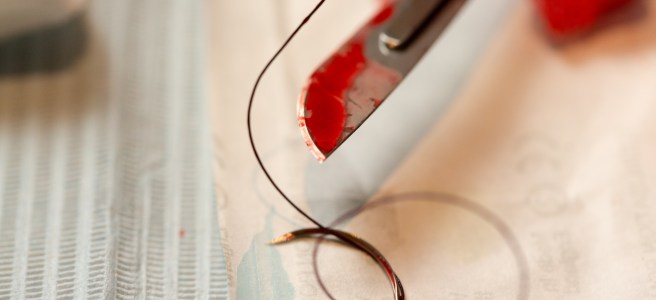
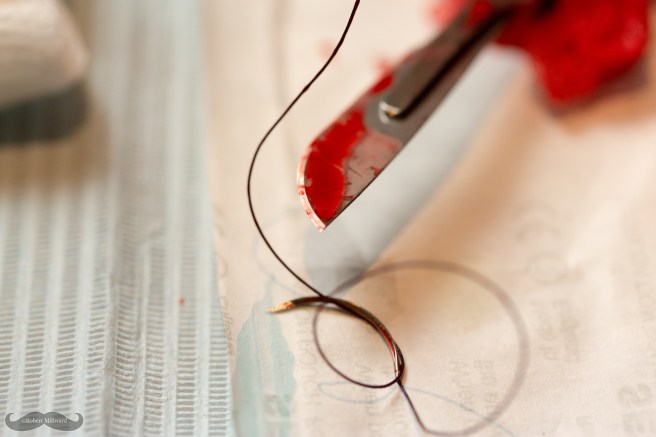
Because diabetic patients with wounds like these aren’t getting good blood flow to the area, tissues become necrotic and die. Necrotic tissue cannot be restored, and increases the risk for infection, so it must be cut away. In both patients, the doctor cut away any blackened, dead tissue until he reached the margins of healthy tissue. But then, interestingly, the doctor would continue cutting with his scalpel, into the healthy, pink, exposed tissue.
If an observer was watching the doctor and didn’t know what the doctor was doing, he might be horrified. Why make the patient’s wound worse and cause more bleeding? The reason for this practice was to enhance blood flow to the damaged area. By cutting into healthy tissue on the edges of the wound, more blood was allowed to enter, bringing in life-giving oxygen to help promote healing.
It sounds paradoxical…injure the patient to heal the patient.
I have found this same paradox to be present and true in our emotional lives. When we experience disappointment, grief, or trauma, even microtraumas, it is easy and instinctual to hunker down, close ourselves off, and resist any further pain. We want safety, and we often try to just stop feeling anything, because those feelings can be scary and they can hurt like hell.
But, to find our way through those things that initially hurt us, and to gain long-lasting healing, we have to dig back into those wounds, unpleasant as it may be. Wounds around our hearts can get hard and crusty over time. Sometimes we learn to protect ourselves by adding layer after layer of distractions, bad habits, and blame of others over those wounds to avoid feeling the rawness that lies underneath. The problem is, all those layers are necrotic, and they are a fertile breeding ground for bitterness, resentment, fear, and hatred.
We are going to get hurt in life. It’s inevitable and is a part of being human. What takes extreme courage is to allow for sacred wounds. I think sacred wounds are those that we self-inflict, or allow others to inflict upon us, as a healthy means to pursue healing. Sacred wounding happens when we take a scalpel (maybe through therapy, or bodywork, or introspection, or meditation, or The Work, or tapping, or countless other modalities) and begin to cut away at the tough exteriors that we’ve built up around our hearts.
Slicing anywhere near old emotional wounds is brutal, but when done with safe people in safe spaces, it can be transforming. Life and love, that are always within our deepest, truest selves, are suddenly able to start seeping out. They bring energy to those places within us that are struggling to breathe, struggling to survive. And those places start to vibrate once again, and begin functioning as they were intended. Over time, streams of life are flowing through those old wounds, where once it was stagnated in a toxic environment.
I once had several emotional wounds that I believed would never heal. They were just too deep, too infected, too complex. I was terrified of any scalpel that offered to cut away the hard callouses that I had built up to protect myself. Fortunately, I’ve learned that the Universe is a good physician. It brings the sacred wounding I need when I need it, and the result has been more healing than I could have ever imagined. Sometimes I still resist sacred wounding, fearful of the ensuing pain from whatever scalpel is being laid to me. But when I can summon just a small amount of courage, and lean into the discomfort, I only gain more life, an increased ability to love, and the flood of light into the deepest, darkest, most hidden places of myself.
Disclaimer: This post will likely not have anything all to do with science. Unless you consider the neurotransmitters in my brain that have helped me reframe and thus respond differently to Valentine’s Day than I have in the past.
I’m not going out tonight. I’m not getting flowers, chocolates, wine, teddy bears, or anything else colored red today. I’m not being romanced by anyone, nor am I pining away for anyone. I’m not listening to sappy love songs, and I’m not going to watch any cliche romantic Valentine movies.
And that’s perfectly OK with me. In fact, I’m great with it, and I harbor no resentment or ill will or jealousy towards anyone who will be happily engaging in the traditional Valentine’s hoopla. I think alot of the reason I’m fine with the current setup is that I’ve learned to change my perspective on what life brings me, and find the good out of what I used to categorically label as horrible.
There’s alot of people out in the world today who are hating Valentine’s or bemoaning the fact that Cupid must have been using a harmless nerf bow on them instead of getting it right and bringing them some great, true, faithful love. I completely empathize with people who aren’t having a great experience today, but I’d like to offer my own personal list of why I just don’t think Valentine’s is worth getting wrecked over.
Listed, in no particular order, except for maybe #1…..I’m happy to have a non-romantic Valentine’s day because…
1. I get to pick the bottle of wine tonight, and I don’t have to share. It’s a Chianti, by the way…
2. Meals at restaurants on Valentine’s Day are ridiculously overpriced and frequently underwhelming.
3. I am not a fan of the consumeristic, contrived expectations that come with Valentine’s. I mean really, how much do you have to spend on someone to prove your love?
4. If someone can only conjure up meaningful romance towards me on Valentine’s day, then there’s not much substance to our relationship to begin with.
5. Valentine’s day has always seemed to be a subtle game of comparison. Who gets what, how big is it, how expensive is it, how novel is it… . it’s just one more way for people, especially women, to employ ranking systems.
6. I personally am more thrilled when someone cleans my kitchen or randomly sends me an unexpected gift on another day, than all the froo froo that comes with Valentine’s. I don’t want jewelry…I want BOOKS.
7. Romance is fueled by obligation, guilt, or hormones. (Oh look, there’s some science!). Not to say there’s anything wrong with romance and the sweaty palms and beating hearts that come with it, but the state of being “in love” is unsustainable in the long term. We fizzle out after a period of time with the other person, and unless there’s some foundation that’s been laid beneath the hot romance, the relationship will struggle. It’s much more appealing to me to have a person who comes through for me 75% of the time and completely spaces Valentine’s day than it is for someone to blow Valentine’s day out of the water yet never really gets to know me or be there when it counts. Anyone can manage one day out of the year; the true test is the people that stick with you over the long haul.
8. I don’t get worked up over not having a fancy Valentine’s day because I am very well loved already. I have my tribe of people – the ones who have seen me ugly with bedhead and no makeup, the ones who have heard me swear like a sailor, the ones who know my deepest shame and worst failures, the ones who know my dreams and what I most fear, the ones who push me to be my best self, the ones who hold to me when I’m not a good friend and don’t love them back well.
The fact is, at some point we’ll all get ugly, we’ll all get saggy in spots, and maybe we’ll eventually stop making adequate amounts of sex hormones ,which will result in a lost interest in or physical ability to do romance anyway. But the thing that stays is our capacity to connect with others on a deeper, more meaningful level than romance or sex can take us. To truly know other people, and be known by them, will always be more important to me than whether or not I have a hot Valentine’s date.
9. Finally, I am my own best Valentine. I will never leave myself, I always look out for myself, I’m really good at picking out gifts for myself, it doesn’t take much to impress or amuse myself, and in general, I show up for myself when it matters. And when I get down deep to my core, past the ego and selfishness to my true self, I live and move and have my being in the great, good Love that connects all things.
There have been certain times in my life where the Universe seems to be trying to teach me about something. Either that or it is just alot of random coincidence converging on me in a short amount of time. Two particular cases that really stuck with me were the topics of baptism and the book of Revelation, back in college.
It seemed like every time I turned around during my junior year, the topic of baptism would come up in church, in lectures, in random settings. I could not get away from it. I now know every baptism related scripture verse, every possible understanding of the texts, and have probably heard almost all of the possible jokes surrounding baptism-like, does it count if you’re baptized in a mirage? Or, what if you drown while being dunked and don’t make it back out of the water before you die?
During the last half of college and for a while after, every time I turned around or visited a new church, it was all about Revelation. Pre-tribulation, post-tribulation, amillennialism, amillennialism with moderate preterite tendencies, Jesus rapture or no Jesus rapture…on, and on, and on. In many settings, my being unwillingly thrust into another Revelation experience was preceded by (read this in a sing-song, Southern accent): “We’re going to be doing a Bible study on the book of Revelations!” By the way, if you ever hear someone say the book of Revelations in regard to a Bible study, I can tell you with about 99% accuracy the specific content that will be covered and with what degree of literalism.
Was the Universe really concerned about my grasp of the various permutations in understandings of baptism and Revelation? Meh, I don’t know. But I can say this: whenever I attend a church who announces they will be covering either of these topics, I will decidedly not be showing up those Sundays.
On to the point of this post. I’m encountering another period where the same topic keeps showing up in my life from multiple avenues. Maybe it’s the universe, maybe it’s just because of the tribe of people I hang out with, the books I read, the podcasts I listen to, etc. This new idea that is hitting me from all angles? The need to show up for YOURSELF.
So, last night I went on a date. It turned out to be a date with myself and my 16 oz Blue Moon, because the guy that was supposed to meet me never showed up. Years ago, pansy, no self-confidence Julie would have been humiliated, feeling rejected, and completely anxiety-ridden about having to sit by myself at a restaurant. I would have told myself stories like: “He probably saw me from the window and took off.” “I bet he magically figured out from my online profile that I have nystagmus and he just couldn’t handle someone whose eyes involuntarily move ninety-to nothing.” “I probably screwed up again and miscommunicated about where and when we were supposed to meet.” “I’m a complete dork…of course things would go this way.”
In the past, I would have projected all kinds of stories onto the situation and ended up feeling horrible. But, because I’ve learned a thing or two over the last decade, and even the last month, and I have had people show up for me in life, this is how I responded to the situation: “Hmm, too bad for him…I’ll see if some of my friends are available to join me. Oh, they’re not. Well, hey! I get all the chips and salsa to MYSELF!” And I proceeded to chow down on the chips (which I’ll have to run off today) and enjoy my beer and….it was fantastic. I thoroughly enjoyed my own company.
Last night’s no-show was a great exercise for me to practice showing up for myself. Unlike unwanted insertions of more baptism and Revelation into my life that make me want to gouge my eyes out, I willingly embrace this learning to show up for myself. Because, myself is all there really is.
No, this is not me being narcissistic and thinking that everything exists for me. Rather, it’s about the three following ideas:
I’m the only one that will always be with myself. I will never leave myself, even when others come and go
My ideas about other people are really just my projection of my own beliefs and stories onto them.
People mirror back to me reflections of myself.
Point number 1 is pretty easy to grasp. We all know we’re stuck inside our bodies until we die…there’s no hopping around to other people, and we can’t really check out from ourselves.
Point 2: What we see and believe about other people comes entirely from our thoughts and perceptions about them. We can never REALLY know another person or their motivations. We can only speculate about them based on our thoughts. And just because a thought comes down the pipeline of our brain does not make it true, no matter how true it might feel. It is still biased and subjective on some level.
Point 3: Scientists frequently talk about mirror neurons in child development. They suggest that children learn behaviors and skills by watching the adults in their lives and then mirroring it back with the help of specialized “empathy” nerve cells. Anyone with children knows this phenomenon is true, both for good and bad. It’s super cute when your baby mirrors back peek-a-boo, but not so cute when they mirror back the “God dammit!” that you let fly out of your mouth when the toilet overflowed from excessive toilet paper insertion.
People mirror back to us what we believe about the world. If we see the world as malevolent and dangerous, we experience anger and danger from other people. If we see the world as good and abundant, we experience that abundance in our relationships and daily life. It’s all a matter of how we perceive things and what thoughts we believe about reality.
Back to showing up for myself. If I’m going to be the only one who is certain of sticking with myself through it all, and my life is really just about the stories I project onto it, then it seems like I need make myself a priority. Obviously, I’m not talking about doing whatever I want at the expense of others. What I’m talking about is getting to know and value MYSELF at the deepest level possible.
Our tendency is to worry about how others perceive us, and then mold and present ourselves in ways that will please them, or at least grant us some level of favor in their eyes. We frequently do this to the detriment of our hearts and betray our own core values. Which, when you think about it, is really kind of dumb when there’s no guarantee that those people will ever come through for you or stay forever, and what you think they think of you is probably a projection anyway.
The things I’m talking about here can feel kind of nebulous, and maybe won’t resonate with anyone. The first time I heard these kinds of ideas I thought it was alot of New-Agey crap. But the more I observe my own life, the more and more I believe that it comes down to me. Of course, I’ll pursue meaningful relationships, and I’ll do the best I can to really KNOW other people, and I’ll try to live my life in such a way that others are benefitted. But…in my mind’s eye I’m thinking of an asymptotic curve (you learned about these at some point in high school math). An asymptote is a line that a curve approaches as it heads toward infinity, but it can never quite reach that line. My analogy is this: we may be really, really accurate about the way things are and know about other people, but we can NEVER be completely accurate. And so I am left with this: I am the asymptotic curve. All I can really know is myself and where I am. I can never completely know anything for sure outside of me. And so, showing up for myself, and really being authentic to my core, and loving myself, is all there really is.
Others will leave you, but you will always have you. So, love yourself well, and make sure and show up every time.
I should recommend the book Loving What Isby Byron Katie. If you pick it up, the first time through you will think she is a nutty old lady who does not have a firm grasp on reality. But if you hang with her, what she says about only having yourself in life will start to make sense.














 Scientuality